Last Updated: November 14, 2026
Quick Summary
An epoxy floor coating warranty for yellowing usually excludes colour change entirely, covering peeling and delamination instead. Most policies list colour variation, fading or yellowing as an exclusion, and interior-use clauses void claims once UV exposure is involved. Read the exclusions list before the coverage list, because that is where the answer lives.
- Lifetime warranties usually mean the product’s rated service life, not your lifetime or the building’s.
- UV yellowing is even and follows the light, strongest near doors and windows and fading in shaded corners.
- Standard epoxy is the least colour-stable of the three common systems; aliphatic polyurethane and polyaspartic resist UV change far better.
- Photograph the affected area in daylight and contact the installer in writing to create a dated record.
- Specify a UV-stable topcoat for any slab that sees direct sun, and keep mix ratios accurate to avoid curing faults.
Table of Contents
- What an Epoxy Floor Warranty Coverage Clause Actually Says About Yellowing
- Epoxy Floor Yellowing Causes: UV, Moisture and Curing Faults
- Why Sunlight and UV Exposure Sit Outside Most Warranty Terms
- Epoxy, Aliphatic Polyurethane and Polyaspartic: Which Systems Hold Colour
- The Epoxy Floor Warranty Claim Process, Step by Step
- How to Prevent Epoxy Floors From Yellowing Before It Starts
- A Warranty Review Checklist for Yellowing Concerns
- Choosing a Coating System That Matches Your Sun Exposure
- Frequently Asked Questions
What an Epoxy Floor Warranty Coverage Clause Actually Says About Yellowing
An epoxy floor coating warranty for yellowing is a written promise about colour stability, and most policies do not promise as much as buyers assume. In practice, the clause usually covers peeling and delamination, then narrows sharply when the topic turns to discoloration.
Across the epoxy, polyurethane and flake systems we install, the same conversation comes up on almost every quote. Homeowners want to know the floor will still look right in five years.
Here is the core tension: a floor can fail in two completely different ways. It can lift off the concrete, which is a structural failure. Or it can stay glued down perfectly while slowly turning amber in the sun, which is a cosmetic change.
Sample warranty wording and what each line means
Warranties are written by lawyers, so the useful information hides in subordinate clauses. Here is how to read the common ones.
| Warranty clause | Plain meaning | What it means for yellowing |
|---|---|---|
| “Warranted against peeling and delamination” | Covers the coating lifting from concrete | Says nothing about colour |
| “Excludes colour variation, fading or yellowing” | Cosmetic change is not covered | Yellowing sits outside the policy |
| “Interior use only” | Not rated for sun exposure | UV damage voids the claim |
| “Warranted for X years from installation” | Fixed term, fixed start date | Claim window closes on a set date |
| “Subject to proper maintenance” | Cleaning and care conditions apply | Neglect can void the whole policy |
Read the exclusions list before the coverage list. That is where the answer usually lives.
Lifetime warranty versus a defined warranty period
A lifetime warranty sounds like the strongest protection on the market. It rarely is.
“Lifetime” normally means the rated service life of the product, not your lifetime and not the life of the building.
A defined warranty period is less impressive in a brochure but easier to enforce. You know the start date, you know the end date, and you know exactly when to lodge a claim.
Epoxy Floor Yellowing Causes: UV, Moisture and Curing Faults
Yellowing has three main causes, and only one of them is sunlight. The other two are installation and moisture problems that can mimic UV damage and send homeowners chasing the wrong remedy.
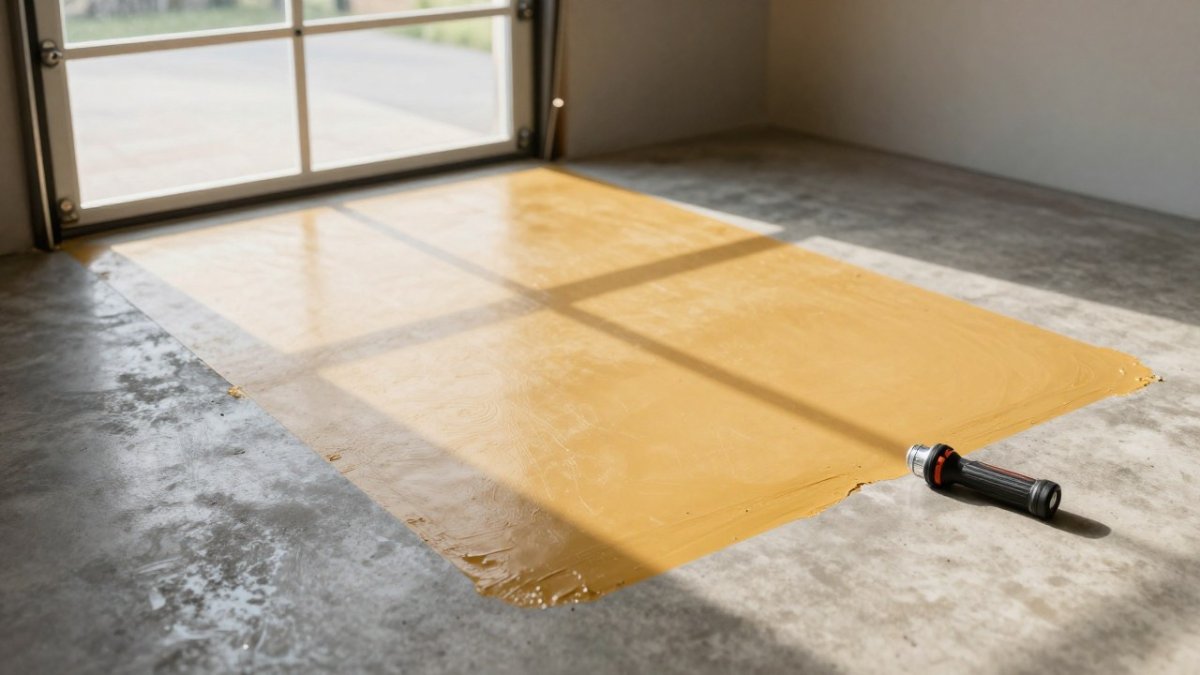
Epoxy floor yellowing causes break down into three groups:
- UV exposure. Ultraviolet light breaks down the chemical bonds in standard epoxy, and the surface turns amber over time. This is a gradual, even colour shift across sunlit areas.
- Moisture. Concrete releases water vapour from below. Trapped moisture can cloud a coating, create a milky haze, or cause blistering that looks like discoloration.
- Curing faults. Mixing errors, applying in cold or humid conditions, or recoating too soon can leave a coating that never fully hardens and looks dull or patchy.
Telling UV yellowing apart from contamination or a curing problem
The pattern tells you the cause. UV yellowing is even and follows the light. It is strongest near doors and windows and fades in shaded corners.
Contamination and curing faults behave differently:
- Patchy and localised marks usually mean surface contamination, such as oil, silicone or dust trapped under the coating.
- Milky or cloudy patches often point to moisture vapour pushing up through the slab.
- Sticky or soft areas suggest a mixing or curing failure rather than UV.
- Blistering or bubbling is almost always moisture or adhesion failure.
A simple test helps. Compare a sunlit section with a section that has never seen direct light. If both have shifted colour, the cause is probably not UV.
Watch out: homeowners often blame UV for a milky haze that is actually moisture vapour.
Why Sunlight and UV Exposure Sit Outside Most Warranty Terms
Warranties exclude UV damage because manufacturers cannot control how much sun a floor receives.
This is not a loophole so much as a design limit. Standard epoxy is a brilliant interior coating, and many products are explicitly rated for interior use only.
The practical consequence is simple. If your garage takes direct sun, the warranty on a standard epoxy system will probably not pay out for a colour change.
Epoxy, Aliphatic Polyurethane and Polyaspartic: Which Systems Hold Colour
Colour stability is a materials question, and the answer is straightforward: standard epoxy is the least colour-stable of the three common systems. Aliphatic polyurethane and polyaspartic coatings are formulated to resist UV-driven colour change far better.
Here is how the three compare.
| System | Colour stability in sun | Best use | Trade-off |
|---|---|---|---|
| Standard epoxy | Low, ambers under UV | Interior slabs, no direct sun | Cheapest per square metre |
| Epoxy base plus aliphatic polyurethane topcoat | High | Sunlit garages, showrooms | Extra coat, extra cost |
| Polyaspartic coating | High | Fast-cure and sun-exposed floors | Higher material cost |
The middle option is the one most homeowners overlook. You keep the build and adhesion of an epoxy base coat, then seal it with a UV-resistant topcoat that carries the colour.
If you want to see the standard epoxy system we compare against, look at our epoxy resin floor range. For sun-exposed slabs, the polyaspartic flooring option is the one we would point you toward.
What most guides miss is that a clear topcoat over a coloured epoxy is not automatically UV-stable. The topcoat has to be specifically rated for it.
The Epoxy Floor Warranty Claim Process, Step by Step
A claim succeeds or fails on documentation, so start collecting evidence the day you notice a problem. Do not wait for the discoloration to spread.
- Find the warranty document. Locate the written terms, the installation date and the product name.
- Photograph the affected area. Take wide shots and close-ups, in daylight, with a reference object for scale.
- Record the pattern. Note which areas are affected and whether they sit in direct sun.
- Check the exclusions. Confirm yellowing is not listed as an excluded event.
- Stop cleaning with harsh chemicals. Aggressive products can complicate the assessment.
- Contact the installer in writing. Email creates a dated record of when you raised the issue.
- Arrange an inspection. Most providers will assess the floor before approving any remedy.
- Get the outcome in writing. Confirm whether the remedy is repair, recoating or replacement.
Realistic expectations matter here. Where yellowing is excluded, the likely outcome is a recoating quote rather than a free replacement.
If you need to raise an issue on a floor we installed, use our contact page to start the conversation and have your installation date ready.
How to Prevent Epoxy Floors From Yellowing Before It Starts
Prevention is cheaper than any claim, and it starts at the specification stage. The single most effective step is choosing a system rated for the light your floor actually receives.
Practical steps that reduce the risk:
- Specify a UV-stable topcoat for any slab that sees direct sun.
- Match the product to the exposure. An interior-rated coating belongs in an interior space.
- Control moisture before coating. Test the slab and address damp issues first.
- Get the surface preparation right. Proper grinding and cleaning prevent adhesion failure.
- Keep the mix ratios accurate. Curing faults are avoidable.
- Use blinds or door seals to cut direct sunlight on a west or north-facing garage.
- Clean with mild products. Harsh chemicals can dull a topcoat over time.
Our garage epoxy flooring service is where these choices matter most, because a garage door is effectively a large window for UV.
A Warranty Review Checklist for Yellowing Concerns
Use this checklist before you sign an installation contract, not after the floor starts to change colour. It takes about ten minutes and saves a great deal of arguing later.
- The warranty is in writing and names the specific product
- The warranty period is stated in years, with a clear start date
- Yellowing and colour change are addressed explicitly, not left silent
- The exclusions list has been read in full
- The product’s UV rating and interior or exterior suitability are documented
- The maintenance requirements are clear and realistic
- The claim process, including who to contact, is written down
That last point catches people out. A product warranty and a workmanship warranty are two different documents, and a claim may sit under one, the other, or both.
Choosing a Coating System That Matches Your Sun Exposure
The right system depends on one question: how much direct sun does the slab get?
- No direct sun, interior use: standard epoxy is cost-effective and performs well.
- Some sun through a door or window: epoxy base with a UV-resistant topcoat.
- Heavy sun, door open most days: polyaspartic or a properly specified aliphatic system.
- Showroom or display space: colour stability matters for brand image, so specify accordingly.
Once you have settled on the system, check the available finishes on our colour chart before finalising the specification.
One more thing worth saying plainly. No coating is permanently immune to colour change.
Yellowing is the most common disappointment in epoxy flooring, and it is almost always a specification problem rather than a product failure.
Frequently Asked Questions
Does an epoxy floor coating warranty for yellowing cover sun damage?
Usually not automatically. Many manufacturers rate their products for interior use and exclude colour change caused by UV exposure beyond the product’s rated limit. Many products are rated for interior use only and may amber or yellow under excessive or repetitive UV. Before assuming you are covered, read the specific exclusions in your warranty document and check whether the coating was sold as UV-stable or topcoated for sun exposure.
How long does it take for epoxy flooring to yellow?
There is no single timeline, because it depends on the product’s UV rating, the intensity and repetition of sun exposure, and whether a UV-resistant topcoat was applied. Aromatic epoxy near a north- or west-facing garage door that takes direct sun for hours daily will shift colour far sooner than an interior floor with no daylight. Ask your installer what UV exposure the specified system is rated for, and get that rating in writing before work starts.
What should I provide when making an epoxy floor warranty claim?
Build a file before you call. Photograph the affected area in daylight and under artificial light, note when the discolouration first appeared, and record how much direct sun the floor receives. Keep your original quote, product data sheets, invoices and the warranty document. Note the installation date and any maintenance products you have used. A claim is assessed against the terms and conditions, so evidence that the coating was installed and maintained as specified is what moves it forward.
Can yellowed epoxy flooring be repaired or recoated?
Often yes, but the fix depends on the cause. If the discolouration is UV yellowing in the epoxy layer, a UV-stable topcoat such as aliphatic polyurethane or polyaspartic can restore appearance and protect what is underneath, provided the existing coating is sound and well adhered. If the problem is moisture, delamination or a curing fault, recoating over it will fail. An inspection first separates a cosmetic fix from a repair, and colour matching a patch to an aged floor is rarely exact.
