
Last Updated: October 24, 2026
Quick Summary
Epoxy flooring resists most automotive chemicals, but not equally. A properly cured coating handles motor oil, coolant and petrol splashes, yet brake fluid, battery acid and strong solvents can mark it within minutes, so wipe spills up promptly.
- Motor oil and coolant offer high resistance, with damage only likely after days to weeks.
- Petrol, diesel and transmission fluid are moderate: wipe them up within minutes to a few hours.
- Brake fluid, battery acid and strong solvents rate low and can damage the coating in seconds to minutes.
- Ask suppliers for the technical data sheet to check test method, exposure conditions and warranty exclusions.
- A 100% solids epoxy with a chemical-resistant topcoat offers the best resistance of the common garage systems.
Table of Contents
- How Epoxy Flooring Handles Automotive Chemicals
- Fluid-by-Fluid Chemical Resistance Chart for Epoxy Flooring
- How to Clean Oil Off an Epoxy Floor Without Dulling the Finish
- Petrol Spill on Epoxy Floor: Why Speed Matters
- Brake Fluid on Epoxy Flooring: The Spill That Punishes Delay
- Epoxy Floor Cleaning and Maintenance That Protects the Coating
- Surface Preparation, Adhesion and the Failures That Follow
- Choosing the Right Epoxy System for Your Garage
- Frequently Asked Questions
How Epoxy Flooring Handles Automotive Chemicals
Is epoxy flooring resistant to automotive chemicals? Mostly yes, but not equally. A properly cured epoxy coating shrugs off motor oil, coolant and petrol splashes, yet brake fluid and strong solvents can mark it within minutes. At Garage Floor Coatings, we have over 20 years of industry expertise in transforming ordinary concrete into high-performance surfaces, and the pattern is consistent.
Why Cured Epoxy Resists Most Garage Spills
Epoxy flooring is a thermoset resin coating that forms a hard, non-porous surface once cured. That dense surface stops most automotive fluids from soaking into the concrete below.
The chemistry matters less than the finish. A fully cured coating blocks oil, coolant and petrol from reaching the slab. Spills sit on top, so you can wipe them up.
Three things drive that protection:
- Correct mixing ratio of resin and hardener
- Full cure time before vehicles return
- A sound concrete substrate underneath
Skip any one and the coating loses its edge.
Where the Resistance Claims Stop
Here is where most guides oversell. No epoxy floor resists every automotive chemical.
Sherwin-Williams on chemical-resistant flooring notes that epoxy is chemical resistant, but resistance depends on the coating system and the exposure.
That gap matters.
Watch out: assuming every epoxy system handles every fluid is how people end up with a stained or softened floor.
If you want a coating built for harsher exposure, polyaspartic flooring offers a more chemical-tolerant alternative worth comparing.
Fluid-by-Fluid Chemical Resistance Chart for Epoxy Flooring
Below is a practical resistance chart for a well-cured, 100% solids epoxy coating applied over a sound, correctly prepared slab. Treat it as a guide, not a guarantee. Resistance varies by formulation, film thickness, temperature and, above all, contact time, so always check the product’s own technical data sheet before you buy.
| Fluid | Typical resistance | Realistic dwell time before damage | What to do |
|---|---|---|---|
| Motor oil | High | Days to weeks; staining possible if left | Wipe up when convenient; routine mopping is enough |
| Coolant (ethylene glycol) | High | Hours to days | Wipe up, rinse with water |
| Petrol (unleaded) | Moderate | Minutes to a few hours | Absorb and wipe within minutes; ventilate |
| Diesel | Moderate | Minutes to a few hours | Wipe promptly; diesel leaves an oily film that dulls sheen |
| Transmission fluid | Moderate | Minutes to hours | Wipe promptly; red dye can stain lighter floors |
| Brake fluid (DOT 3/DOT 4) | Low | Minutes | Remove immediately; do not let it pool |
| Power steering fluid | Moderate | Minutes to hours | Wipe promptly |
| Battery acid (dilute sulfuric) | Low | Seconds to minutes | Neutralise and rinse immediately; acid etches the surface |
| Strong solvents (thinners, acetone, brake cleaner) | Low | Seconds | Avoid contact; if spilled, wipe immediately and ventilate |
| Household degreasers (alkaline) | Moderate | Minutes | Dilute as directed; rinse thoroughly |
Dwell times above assume a room-temperature spill on a fully cured coating. A hot spill, a concentrated product or a floor that is still within its cure window will shorten those times significantly.
The pattern: oils and coolants are forgiving. Fuels are manageable if you act fast. Brake fluid, battery acid and solvents are the ones that punish delay.
Why the Chart Is Not a Guarantee
A resistance chart is only as good as the test behind it. Manufacturers typically test by immersing a cured sample in a fluid for a set period at a set temperature, then checking for softening, blistering, colour change or loss of adhesion. The result is a rating for that specific product under those specific conditions, not a promise about your floor.
Three variables move the result more than anything else:
- Concentration. A splash of diluted coolant is not the same as neat brake fluid.
- Temperature. A hot engine drip onto a warm floor attacks the coating faster than a cold spill.
- Contact time. Most automotive fluids are harmless for minutes and problematic for hours.
How to Verify a Product’s Chemical-Resistance Claims
Before you commit to a coating, ask the supplier for the technical data sheet (TDS) and read it for three things:
- The test method. Look for a recognised standard such as AS/NZS 1580 series methods for paint and coatings testing, or an equivalent ISO method. A rating with no method behind it is marketing.
- The exposure conditions. Check the concentration, temperature and duration used in the test. A 24-hour immersion result tells you more than a vague “resistant” claim.
- The warranty exclusions. Most coatings warranties exclude damage from harsh chemicals, brake fluid and solvents. If the warranty excludes it, the manufacturer is telling you the resistance has limits.
Ask the supplier a direct question: “Which automotive fluids does this product resist, at what concentration and for how long, and where is that documented?” A supplier who cannot answer in writing is a supplier to avoid.
Spill Response: What to Do and When to Call the Manufacturer
Prompt cleanup is the single biggest factor in whether a spill becomes a stain. The sequence is the same for most fluids:
- Contain. Stop the spill spreading with absorbent cloth, spill granules or a containment sock.
- Absorb. Blot, do not scrub, so you lift the fluid rather than push it into the surface.
- Neutralise if needed. For battery acid, apply a suitable neutraliser, then rinse thoroughly with clean water.
- Clean. Use a pH-neutral cleaner and a soft cloth, then rinse and dry.
- Ventilate. Fuels and solvents release vapours; ventilate the space and remove ignition sources before you start.
Call the coating manufacturer, not just your installer, if the spill was brake fluid, battery acid or a strong solvent, if the fluid sat for more than an hour, or if you see softening, blistering or a colour change after cleaning. They can tell you whether the damage is cosmetic or structural, and whether a patch repair or a full recoat is the right response.
If you want a coating built for harsher exposure, polyaspartic flooring offers a more chemical-tolerant alternative worth comparing.
How to Clean Oil Off an Epoxy Floor Without Dulling the Finish
Learning how to clean oil off an epoxy floor is simpler than most people expect. The trick is a pH-neutral cleaner and a soft cloth, not a harsh solvent.
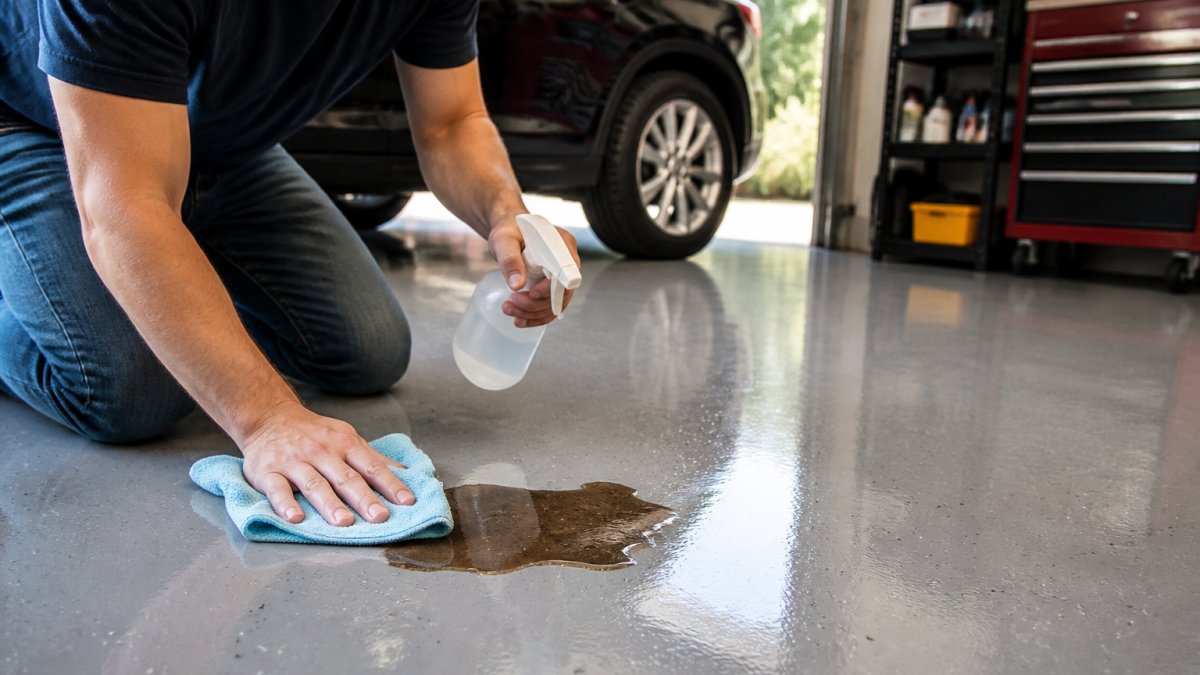
Follow these steps:
- Blot fresh oil with an absorbent cloth first
- Spray a pH-neutral cleaner on the mark
- Let it sit for a minute, then wipe
Avoid abrasive pads and strong degreasers. They dull the finish and strip the sheen. For older, set-in marks, a little patience beats scrubbing hard.
Petrol Spill on Epoxy Floor: Why Speed Matters
A petrol spill on epoxy flooring is manageable, but time is your enemy. Petrol is a solvent, and prolonged contact softens the coating.
Act within minutes:
- Ventilate the area and remove ignition sources
- Absorb the spill with cloth or spill granules
- Wipe with a pH-neutral cleaner
Left too long, petrol can leave a dull patch or lift the finish. If a repair is needed, plan for downtime. Our guide to garage flooring downtime and cure times explains how long the floor must stay off-limits.
Brake Fluid on Epoxy Flooring: The Spill That Punishes Delay
Brake fluid on epoxy flooring is the spill to take seriously. It is aggressive and can soften or stain the coating fast.
The fix is speed, not scrubbing. Absorb it immediately, then clean with a pH-neutral product. Do not let it pool.
A common mistake is treating brake fluid like oil. It is not. A slow response can mean a permanent mark or a patch that needs recoating.
Epoxy Floor Cleaning and Maintenance That Protects the Coating
Regular cleaning keeps the coating intact and the finish sharp. Maintenance is where most floors either last or fail.
Build a simple routine:
- Sweep or dust-mop weekly to remove grit
- Mop with a pH-neutral cleaner, never harsh acids or alkalis
- Wipe spills promptly, especially fuels and brake fluid
For the right products and sealing options, see our services. A little upkeep goes a long way.
Surface Preparation, Adhesion and the Failures That Follow
Most coating failures trace back to the concrete, not the chemical. Poor surface preparation kills adhesion, and weak adhesion leads to delamination.
Delamination is when the coating lifts away from the slab. Once that happens, fluids get underneath and the damage spreads.
Common causes:
- A dusty, oily or damp slab before coating
- Skipped grinding or etching
- Coating applied before the concrete is fully dry
Get the preparation right and the coating bonds hard. Skip it and no chemical resistance will save you.
Choosing the Right Epoxy System for Your Garage
Picking the right system is the difference between a floor that lasts and one that fails. Match the coating to how you use the space, and to the fluids you actually expect to hit it.
Ask three questions:
- What fluids will hit the floor most?
- How often, and for how long?
- How heavy is the traffic?
For weekend car work, a standard epoxy system handles the oil and coolant. For harsher use, look at a tougher formulation. To see the actual service you can book, explore our tailored solutions for residential garages.
Not Every Epoxy Is the Same
A common mistake is assuming every epoxy floor has identical chemical resistance. It does not. The formulation and the number of coats change the performance more than the word “epoxy” on the tin.
- 100% solids epoxy. Little or no solvent, so it builds a thicker film per coat and generally offers the best chemical resistance of the common garage systems. This is the benchmark to compare against.
- Water-based epoxy. Lower odour and faster recoat, but typically a thinner film and lower resistance to solvents and fuels. Fine for light domestic use; less suited to a working garage.
- Solvent-based epoxy. Good penetration and adhesion, but the solvent content means a thinner cured film and more sensitivity to strong chemicals.
If chemical resistance is your priority, ask for the solids content, the film thickness and the topcoat specification, not just the product name. Those three numbers tell you more than any marketing claim.
Matching the System to the Exposure
A simple way to think about it:
- Domestic garage, occasional DIY. A standard 100% solids epoxy with a clear topcoat handles oil, coolant and the odd fuel splash.
- Working garage, regular repairs. Specify a higher-build system with a chemical-resistant topcoat, and confirm the TDS lists the fluids you expect.
- Commercial or high-traffic workshop. Look for a system with documented resistance to the specific fluids used on site, and factor in abrasion resistance as well as chemical resistance.
What to Ask Before You Book
Before you commit, ask your installer four questions:
- What is the solids content and the specified film thickness?
- What topcoat is being used, and what does its TDS say about automotive fluids?
- What surface preparation is included, grinding, shot-blasting or etching?
- What does the warranty exclude?
A straight answer to those four questions is worth more than any brochure. Talk to our team for advice on the right system for your space. You can contact us for a quote or guidance. You can contact us for a quote or guidance. We have over 20 years of industry expertise in transforming ordinary concrete into high-performance surfaces, and we will tell you honestly what your floor needs.
Frequently Asked Questions
Can petrol damage an epoxy floor?
Petrol can dull or soften a cured epoxy coating if it sits on the surface for long periods. Short splashes wiped up within minutes are usually harmless, but repeated pooling around a fuel filler or mower storage area wears the finish. Wipe spills promptly, rinse with water, and avoid letting fuel stand overnight. If the surface turns tacky or chalky after a spill, the coating has been affected and needs inspection before the damage spreads.
Will engine oil stain epoxy flooring?
Fresh engine oil generally wipes off cured epoxy without staining, but used oil carrying carbon and metal particles can leave a dark mark if left for days. Clean with a pH-neutral degreaser and a soft-bristle brush rather than aggressive solvents. Regular cleaning keeps the gloss intact and stops residue building up in textured or flake finishes.
How quickly should automotive chemical spills be cleaned from epoxy?
Aim to remove petrol, brake fluid and solvents within 10 to 15 minutes. Brake fluid is the most aggressive common garage fluid and can soften a coating left standing for an hour or more. Oil and coolant are more forgiving but should still be cleaned the same day. Keep absorbent material and a neutral cleaner in the garage so a spill is a two-minute job rather than a weekend problem.
What should you not use to clean an epoxy floor?
Avoid strong solvents such as acetone, paint thinner and undiluted degreasers, plus bleach and abrasive scouring pads. These strip the gloss, dull the surface and can break down the coating over repeated use. Stick to pH-neutral cleaners, warm water and a microfibre mop. If a stain resists, use a purpose-made epoxy cleaner and test it on a small hidden patch first.
Not sure which coating suits your garage? Garage Floor Coatings brings over 20 years of experience, cutting-edge epoxy and polyurethane materials, and tailored solutions for homes, workshops and commercial spaces. We handle everything from consultation to the final finish, with meticulous attention to detail at every step. Get started with Garage Floor Coatings and book a floor that stands up to real garage life.
