Last Updated: November 20, 2026
Quick Summary
The right epoxy colour depends on the work done on the floor, not the showroom swatch. Mid-grey and charcoal flake systems suit most working garages because they hide oil marks and scuffs, while metallic finishes suit display areas better than busy workshops. Test sample chips under your own lighting before you commit.
- List the fluids, traffic and debris your workshop produces before choosing a colour.
- Flake finishes hide dust, scratches and light debris better than solid colour.
- Metallic epoxy shows dust and tyre marks as patches, so suit it to light use.
- Light floors reveal spills but show grime; mid-tones often balance visibility and dirt.
- Place sample chips on the concrete and observe at several times of day.
Table of Contents
- Start With What Your Workshop Actually Does
- Solid, Flake and Metallic: Which Finish Suits Your Work
- Light vs Dark Epoxy Floors: Trade-Offs for Visibility and Dirt
- Best Epoxy Floor Colours for Workshops by Use
- How Lighting Changes the Colour You See
- Testing Colour With Samples Before You Commit
- Choosing Your Colour and Booking a Consultation
- Frequently Asked Questions
Start With What Your Workshop Actually Does
Choosing an epoxy colour for a workshop starts with the work, not the swatch. A home garage used for weekend car servicing has different needs from a warehouse bay running forklifts. Get the use right first, and the colour decision becomes much simpler.
Each group of flooring buyers asks a different question. The starting point is the same: what goes on this floor, and how often?
Write down the main tasks before you look at colour charts. Consider these questions:
- Which fluids will hit the floor? Oil, brake fluid, coolant, degreasers and cleaning chemicals all leave marks. Some stain light colours quickly.
- How much traffic is there? Vehicles, trolleys and dragged tools cause scuffs and tyre marks.
- Is the space mostly for storage, or for hands-on work? Storage areas can tolerate a plainer finish. Workbenches and assembly areas benefit from a floor that hides debris.
- Do you need safety marking? Walkways, exits and hazard zones often need high-contrast lines.
A common mistake is choosing a colour for how it looks in the showroom sample, then discovering it shows every drop of oil. Match the colour to the mess you expect to make, then to the look you want.
Solid, Flake and Metallic: Which Finish Suits Your Work
The finish type shapes both appearance and practicality. The three main options behave quite differently.
Solid colour is a single, even tone across the floor. It gives a clean, uniform look and is the easiest to match to safety markings. The trade-off is that solid colour shows surface marks more readily, particularly on lighter bases. Solid colour suits workshops where you want clear visual lines and a plain, professional finish. You can explore the range on our Solid Colour page.
Flake systems scatter coloured chips through a clear or tinted base. The flakes break up the surface so small scratches, dust and light debris blend in. For most working garages, flake is the most forgiving option. Our Colour Flakes page shows how different flake blends look in practice.
Metallic epoxy creates a swirled, mirror-like effect. It looks striking in showrooms and high-end spaces, but it is less forgiving in a busy workshop. Fine dust and tyre marks can show up as patches within the swirl. If the look matters most and the floor sees light use, metallic is a strong choice. For heavy use, consider it carefully. You can see what it involves on our Metalic Epoxy Flooring page.
Here is a quick comparison to help narrow the choice:
| Finish | Hides dust and scuffs | Look | Best for |
|---|---|---|---|
| Solid | Low to moderate | Clean, uniform | Clear markings, showrooms, light use |
| Flake | High | Textured, practical | Working garages, mixed use |
| Metallic | Moderate | Dramatic, glossy | Display areas, low-traffic workspaces |
Light vs Dark Epoxy Floors: Trade-Offs for Visibility and Dirt
Colour depth changes how a workshop feels and how it performs. Light and dark floors each have clear advantages.
Light colours reflect more light, so a workshop feels brighter and parts are easier to find. Light tones also make spills, dropped screws and dark debris easy to spot. The downside is that light floors show oil, tyre marks and grime more visibly. A light grey floor in a busy car workshop may need more frequent cleaning to look presentable.
Dark colours hide most stains and tyre marks well. They suit heavy-use areas where mess is part of the work. The trade-off is that dark floors absorb light, so a workshop with limited lighting can feel dim. Dark dust can also show pale debris, such as sawdust or shavings.
Mid-tone colours often offer the best balance. They reduce glare, hide moderate dirt and keep the space feeling reasonably bright. For many working garages, a mid-grey flake system strikes the right compromise.
Watch out: a light floor in a space with poor overhead lighting can make the room look even darker by contrast. Check your lighting before you settle on a pale shade.
Best Epoxy Floor Colours for Workshops by Use
Most colour guides stop at “light for bright, dark for hiding dirt”. In a working workshop the activity itself should drive the choice, because each trade produces a different kind of mess and a different visibility problem.
Automotive repair and servicing. Expect oil, brake fluid, coolant, grease and tyre marks. Mid-grey and charcoal flake systems are the common choice because the flake pattern breaks up scuffs and the mid tone hides oil staining better than white or pale grey.
Woodworking and carpentry. The main debris is pale sawdust, shavings and offcuts. A mid-tone or warm grey floor gives enough contrast that light dust and small dropped pieces are easy to see, while still hiding the fine dust film that settles after machining.
Metal fabrication and welding. Grinding dust, metal shavings, welding spatter and cutting fluid all land on the floor. Darker flake systems hide metal dust and spatter marks well, but check that the floor is not so dark that small dropped fasteners disappear.
Electronics and precision assembly. Small components, screws and wire offcuts are the cleanup problem, and visibility matters more than stain hiding. A light or mid-grey solid or fine-flake floor makes tiny parts easy to spot, and a lighter floor reflects light onto workbenches.
Mixed-use and storage. Where the floor is mostly storage with occasional hands-on work, a mid-grey flake system covers most needs. It hides moderate dirt, does not glare under lights and gives enough contrast for safety lines. Plain solid colour suits areas where you want clear visual boundaries and spills are rare.
Home garage with weekend car work. Mid-grey or charcoal flake remains the practical default. It hides oil marks and tyre scuffs, keeps the floor looking tidy between cleans and is forgiving of the occasional dropped tool.
Showroom or dealership floors. Metallic or high-gloss solid colour creates a premium look, provided traffic is controlled and the floor is cleaned often.
Stone-effect finishes for a refined workshop look. Browse the options on our Stone Range page, then test samples in your own lighting before committing.
You can compare colour options on our Colour Chart page before narrowing your shortlist.
How Lighting Changes the Colour You See
Lighting may be the most overlooked factor in epoxy colour choice. The same swatch can look completely different in a sunny garage doorway and under cool LED tubes, and the difference is not imagination.
Colour temperature. Artificial light is rated by colour temperature in kelvin. Cool white LEDs, common in workshops, sit around 4000-5000 K and make grey floors look slightly bluish. Warmer bulbs around 2700-3000 K make the same grey look slightly brown or creamy. Daylight shifts through the day, warmer in the morning and cooler in the afternoon.
Shadows and contrast. A light floor in a space with poor overhead lighting can make the room look darker by contrast, because the eye adapts to the bright floor and the corners fall into shadow. Dark floors absorb light, so a workshop with limited fixtures can feel dim.
Sheen and gloss. Metallic and high-gloss finishes catch light differently from matte or satin systems. A glossy surface can glare under direct fixtures, and the swirl pattern in metallic epoxy can make dust and tyre marks read as patches within the reflection. Flake finishes scatter light, which softens glare and helps hide fine marks.
Testing under real light. Bring the sample into the space rather than judging it in a showroom. Place sample chips directly on the concrete, then observe at several times of day with the lights you normally use. Turn the main lights on and off, and note whether the floor looks too dark or too bright.
Cured samples, batch variation and screen images. A screen image or a printed brochure is not a reliable guide to a cured floor. Screens vary in calibration, and printed swatches cannot show the sheen of a topcoat.
Watch out: judging a metallic or high-gloss finish from a small chip under showroom lighting is the most common way to end up with a floor that looks different once installed, because the swirl and reflection only appear across a full floor.
If you run a commercial or industrial site, lighting checks should also confirm that safety marking colours remain clearly visible against the base under the fixtures you actually use, not just in daylight.
Testing Colour With Samples Before You Commit
Sample testing is the cheapest way to avoid an expensive mistake. Treat it as a standard step, not an optional extra.
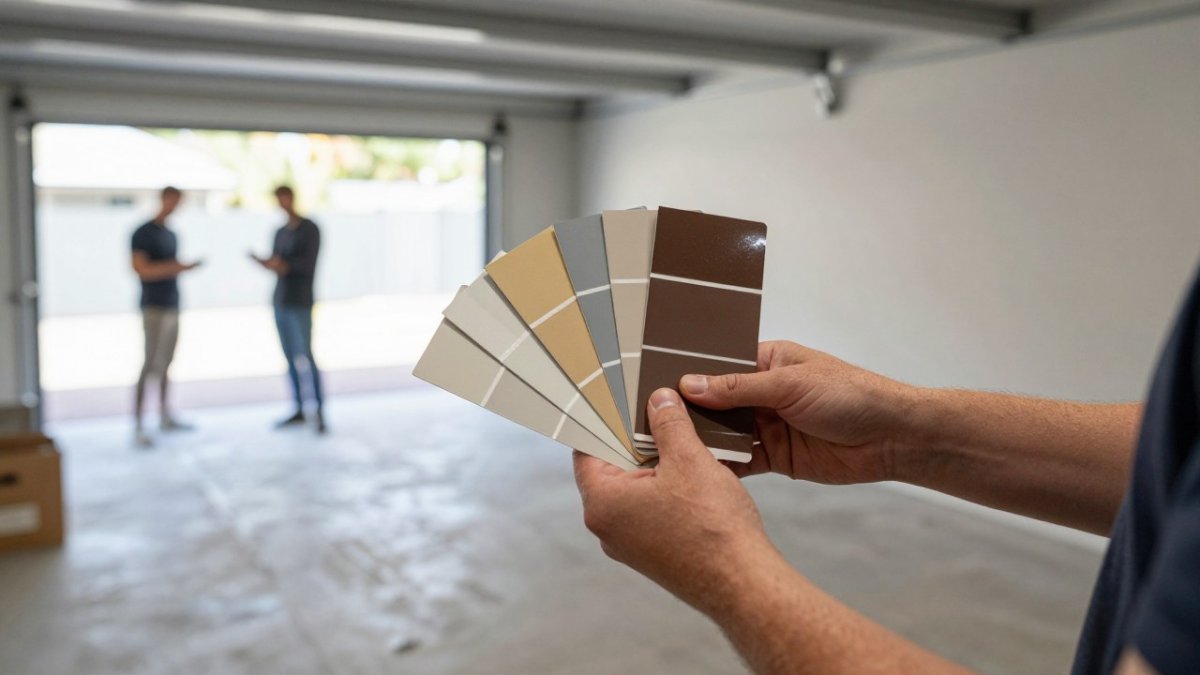
A practical process looks like this:
- Shortlist three colours that suit your use case. More than three makes comparison hard.
- Place sample chips directly on the concrete in the area where the floor will be installed.
- Observe at several times of day. Check morning, midday and evening, with the lights you normally use.
- Simulate the mess. Drop a few drops of oil, a little dirt, or some sawdust on each sample to see how visible it is.
- Stand where you will work. Look at the sample from a workbench or doorway, not from directly above.
- Ask a second person who uses the space for their opinion.
Note which colour hides the most of your typical mess while still looking right in your lighting. That combination matters more than how any single sample looks in isolation.
If you run a commercial or industrial site, sample testing also helps confirm that safety marking colours remain clearly visible against the base.
Choosing Your Colour and Booking a Consultation
The right colour comes from the answers to four questions: what the space is used for, what mess it creates, how it is lit, and what finish you want. Work through those in order, shortlist a few options, and test them in the actual space.
Garage Floor Coatings has over 20 years of industry experience. We can talk through your workshop’s use and lighting, then recommend a finish that suits your needs. Pricing depends on quantity, dates and delivery, so for current prices, visit the Garage Floor Coatings website or request a quote.
Contact us to book a consultation. We will look at your floor, discuss the options, and help you choose a colour you will still like after the first oil spill.
Frequently Asked Questions
What is the best epoxy floor colour for a workshop?
There is no single best colour, because it depends on the work done in the space. Mid-tone grey and flake finishes are commonly chosen for home workshops because they hide oil marks, dust and tyre marks better than very light or solid dark colours. Lighter colours brighten a space and make dropped parts easier to spot, while darker floors can show dust quickly. Test two or three options under your own lighting before deciding, and ask your coating provider for sample boards.
Which epoxy floor colours hide dust and dirt best?
Mid-tone greys, warm neutrals and flake finishes with varied colour chips tend to hide dust, debris and light staining better than solid white or solid black. Flakes break up the surface so small marks blend in. Solid dark colours often show dust and tyre marks clearly, while solid pale colours can show oil and scuffs. Choose based on the type of mess your workshop creates most often.
Do epoxy flakes make a workshop floor easier to maintain?
Flake finishes can make day-to-day maintenance easier because the broken pattern disguises minor marks and dust between cleans. Regular sweeping and prompt removal of spills keep any finish looking its best, whatever colour you choose.
How do I choose an epoxy floor colour that suits my workshop lighting?
Look at sample chips in the same light your workshop uses most, both daytime natural light and your overhead LED or fluorescent lights. Colours can look noticeably different under cool white and warm white light. A brighter, lighter floor reflects more light and can make a small garage feel larger, while a darker floor absorbs light and may need extra lighting. Check samples at several times of day before you commit.
