Last Updated: October 25, 2026
Quick Summary
To remove oil stains garage floors, first absorb excess oil with cat litter, sawdust, or baking soda for at least 24 hours. Then apply a mild detergent like dish soap mixed with warm water, let it soak for 10-15 minutes, scrub with a stiff brush, and rinse thoroughly. For old stains, use a commercial concrete degreaser and repeat the process if needed.
- Fresh oil spills respond well to absorbent materials and mild detergents within hours or days of the spill.
- Concrete type matters: sealed concrete traps oil on top while bare concrete absorbs it quickly and deeply.
- Old stains require commercial degreasers with 15-30 minute dwell times and may need two or three applications.
- Polished concrete needs pH-neutral cleaners and soft brushes to avoid scratching the finish.
- Dispose of oil-saturated materials through local council hazardous waste services, never down drains or onto soil.
Table of Contents
- Assess the Stain Before You Clean
- How to Remove Fresh Oil Spills From Concrete
- Absorb Excess Oil With the Right Materials
- Best Oil Stain Remover for Concrete: Methods and Products
- How to Remove Old Oil Stains From Concrete
- How to Remove Oil Stains From Polished Concrete
- Safety, Disposal, and Prevention
- Protect Your Garage Floor From Future Oil Damage
- Frequently Asked Questions
Assess the Stain Before You Clean
The first step to remove oil stains garage floors is understanding what you’re dealing with. Not all stains respond to the same treatment. A fresh spill needs a different approach than oil that’s been sitting for months. The concrete type matters too.
Check the concrete finish and stain age
Your concrete finish determines which removal method works best. Polished concrete, sealed concrete, etched concrete, and bare concrete all react differently to cleaners and scrubbing. Sealed surfaces protect the concrete but can trap oil on top, making removal easier in some ways and harder in others. Bare concrete is porous and absorbs oil quickly, driving it deep into the surface.
Stain age changes everything. Fresh oil spills sit on the surface and respond well to absorbent materials and mild detergents. Old stains have penetrated deeper and often require commercial degreasers or enzyme cleaners to break down the oil molecules. A mystery stain you’ve never been able to identify calls for a different strategy altogether.
Ask yourself three questions before you start:
- How long has the oil been there? Days, weeks, or years?
- What type of concrete do you have? Sealed, polished, etched, or bare?
- How large is the affected area? A small spot or a widespread problem?
Your answers guide which method to use and how much effort you’ll need to invest.
How to Remove Fresh Oil Spills From Concrete
Fresh oil spills are your best opportunity for quick removal. The longer oil sits, the harder it becomes to remove completely. If you catch a spill within hours or days, you can often eliminate it with basic household materials.
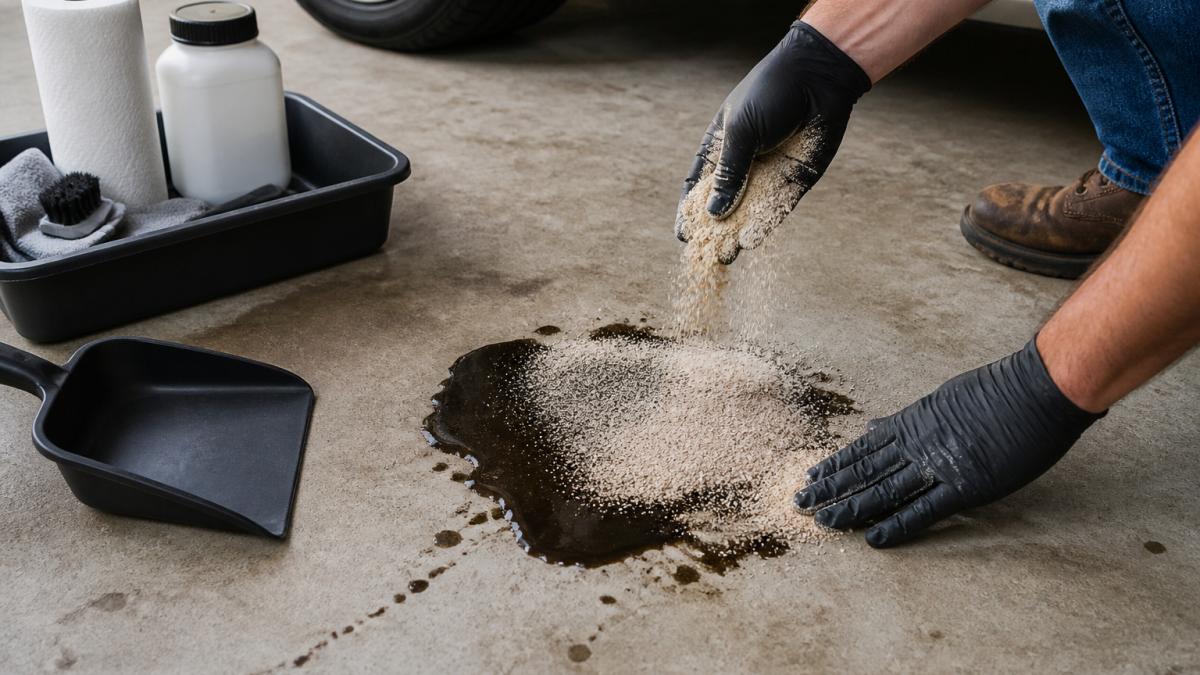
Start by stopping the spread. Use an absorbent material to soak up as much oil as possible before it spreads further across your garage floor.
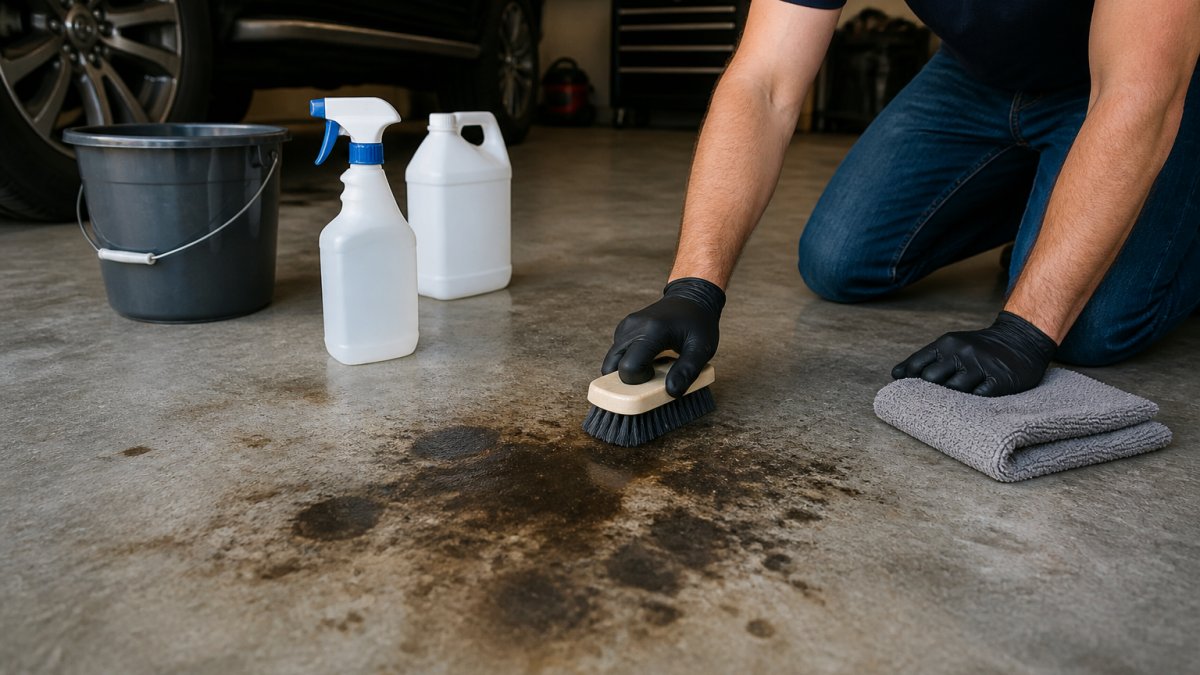
Once you’ve absorbed the excess oil, apply a mild detergent mixed with warm water. Dish soap works well for this. Let the soapy water sit on the stain for 10-15 minutes to begin breaking down the oil.
For stubborn fresh spills, a household degreaser can help. These products are gentler than industrial-strength degreasers but still effective on oil that hasn’t set in yet. Apply according to the product instructions, let it dwell for the recommended time, scrub, and rinse completely.
Absorb Excess Oil With the Right Materials
The first action you take after an oil spill determines how much work lies ahead. Absorbing excess oil before it soaks into the concrete makes everything easier. You’re buying yourself time and reducing the depth of penetration.
Absorbent materials work by drawing oil out of the concrete and holding it on the surface. Common options include:
- Cat litter, cheap, effective, and readily available. Use clay-based litter, not clumping varieties.
- Sawdust, works well but can leave residue. Choose untreated sawdust to avoid introducing chemicals.
- Baking soda, mild abrasive that absorbs oil and helps with odour. Requires more time than other options.
- Commercial absorbent products, designed specifically for oil spills. Often contain polymers that absorb more oil per volume.
- Kitty litter alternatives, diatomaceous earth or other mineral-based products work similarly to cat litter.
Spread your chosen material thickly over the wet oil spill. Press it down gently so it makes contact with the oil. Leave it in place for at least 24 hours, longer for larger spills. The material will darken as it absorbs the oil. Once it’s saturated, sweep it up and dispose of it properly.
For fresh spills, this single step often removes enough oil that the remaining stain becomes barely noticeable. Don’t skip this step thinking you’ll just clean it later, absorbed oil is oil you won’t have to fight with harsh chemicals.
Several absorbent materials can draw oil out of concrete after a spill, each with different strengths and considerations.
| Material | Best For | Key Difference |
|---|---|---|
| Cat litter | General use | Cheap, effective, readily available |
| Sawdust | General use | Works well but can leave residue |
| Baking soda | Odour control | Mild abrasive, requires more time |
| Commercial absorbent products | Maximum absorption | Polymer-based, absorbs more oil per volume |
| Diatomaceous earth | Alternative option | Mineral-based, works like cat litter |
Best Oil Stain Remover for Concrete: Methods and Products
After you’ve absorbed excess oil, the real cleaning begins.
Household cleaners and natural acids
These options are gentler on the concrete and your hands, making them ideal for smaller stains or regular maintenance cleaning.
Dish soap and warm water remains one of the most effective household solutions.
Lemon juice and vinegar contain citric acids that dissolve oil. Mix equal parts lemon juice (or white vinegar) with warm water.
Baking soda acts as a mild abrasive and oil absorber. Make a paste by mixing baking soda with a small amount of water.
Commercial degreasers and enzyme cleaners
These products are formulated specifically to break down petroleum-based oils and grease. They’re more powerful than household options and work faster on set-in stains.
Concrete degreasers contain surfactants and solvents that penetrate deeper into the porous concrete. They’re especially effective on old stains that have bonded with the concrete surface.
Enzyme cleaners use biological enzymes to break down oil molecules. They’re less toxic than chemical degreasers and work well on fresh to moderately aged stains.
Both types work best when you follow the manufacturer’s instructions precisely.
How to Remove Old Oil Stains From Concrete
To remove oil stains garage floors that are old, they have penetrated deep into the concrete, bonding with the porous surface at a molecular level.
Start with a commercial concrete degreaser formulated for heavy-duty oil and grease removal. These products are stronger than household alternatives and designed for exactly this situation.
After the dwell time, scrub vigorously with a stiff brush. Use firm, circular motions and don’t hold back. The brush action helps the degreaser penetrate further and break apart the oil bond.
Rinse thoroughly with clean water. You may need multiple rinses to remove all traces of the degreaser and loosened oil. Incomplete rinsing leaves residue that can make the concrete slippery.
If the stain remains after one treatment, repeat the process. Old stains often require two or three applications to achieve complete removal. Each application penetrates a bit deeper and removes more of the set-in oil.
Accept that some very old stains may leave a faint shadow even after aggressive cleaning. The concrete itself may be permanently discoloured where the oil bonded deeply.
How to Remove Oil Stains From Polished Concrete
Polished concrete requires special care because the polished surface can be damaged by aggressive scrubbing or harsh chemicals. However, the polished finish also works in your favour, oil sits on top rather than soaking in immediately.
For fresh spills on polished concrete, absorb excess oil first using the same materials as for bare concrete. Then use a pH-neutral cleaner specifically designed for polished concrete. These cleaners clean effectively without dulling the polish or leaving residue.
Apply the pH-neutral cleaner according to product instructions. Most require dilution with water. Scrub gently with a soft cloth or soft-bristled brush, avoid stiff brushes that can scratch the polished surface.
For stubborn stains on polished concrete, a concrete degreaser formulated for sealed or polished surfaces offers more cleaning power while still protecting the finish.
Never use acidic cleaners like vinegar on polished concrete, they can etch the surface and dull the polish. Similarly, avoid abrasive scrubbing that scratches the finish.
Polished concrete floor guidance(page:1) provides more detailed information on maintaining polished finishes and understanding your specific floor type.
Safety, Disposal, and Prevention
Cleaning up oil spills safely protects your health and the environment. The chemicals and materials involved require proper handling.
Ventilation and chemical handling
Work in a well-ventilated space. Open garage doors and windows to allow air circulation.
Wear appropriate protective equipment. Gloves protect your hands from harsh chemicals and oils. Safety glasses shield your eyes from splashes during scrubbing and rinsing.
Read all product labels before use. Different degreasers and cleaners have different safety requirements.
Store all cleaning products in their original containers in a secure location away from children and pets. Never mix different cleaning products, chemical reactions can produce toxic fumes.
Environmental disposal and ongoing maintenance
The oil and absorbent materials you collect must be disposed of properly. Many councils offer hazardous waste collection services.
Never pour oil down drains or onto soil (the EPA). Oil contaminates water supplies and harms soil ecosystems. Dispose of it through proper channels.
After cleaning, prevent future stains by addressing the source. If you’re working on cars in your garage, use drip trays under vehicles.
Professional cleaning and sealing services(page:2) can help protect your concrete long-term.
Protect Your Garage Floor From Future Oil Damage
The best stain is one that never happens. Preventing oil damage is far easier than removing stubborn stains.
Use drip trays under vehicles during maintenance work. Position them to catch leaks before oil reaches the concrete. Check hoses and connections regularly for signs of wear or seepage.
Store oil and fluids in sealed containers on shelves or in cabinets, not on the garage floor. This keeps spills contained if containers tip or leak.
Consider upgrading your garage floor surface. A sealed concrete floor resists oil penetration much better than bare concrete.
Garage epoxy flooring options(page:3) offers superior protection against oil, chemicals, and moisture. Many homeowners find that upgrading their garage floor eliminates staining concerns entirely while improving the overall appearance and durability of the space.
For those serious about preventing future damage, garage flooring cure times(page:4) explains what’s involved in upgrading your floor and how long the process takes.
Oil stains on garage floors are frustrating, but they’re solvable. Fresh spills respond quickly to absorbent materials and mild soap. Old stains require patience and commercial degreasers, but they do come out.
Frequently Asked Questions
Can dish soap remove oil stains from a garage floor?
Dish soap mixed with warm water can help remove fresh or light oil stains from concrete. Apply the solution, let it soak for 10-15 minutes, then scrub with a stiff brush and rinse thoroughly. For older or stubborn stains, dish soap alone is rarely effective; a commercial concrete degreaser or enzyme-based cleaner works better. Test on a small area first, especially on sealed or polished concrete.
How do you remove old, set-in oil stains from a garage floor?
Set-in stains require repeated treatment and stronger cleaners. Use a commercial concrete degreaser or enzyme cleaner, apply generously, and allow extended dwell time (2-4 hours or overnight). Scrub firmly with a stiff brush, rinse, and repeat if necessary. For very stubborn stains, consider poulticing (applying a paste that draws out residual oil) or consulting a professional. Some discoloration may remain permanently on bare or porous concrete.
What is the best cleaner for oil stains on concrete?
The best cleaner depends on stain age and concrete finish. Fresh spills respond to dish soap and warm water or household degreasers. Older stains benefit from enzyme-based cleaners or commercial concrete degreasers containing surfactants. For polished or sealed concrete, use pH-neutral cleaners to avoid damaging the finish. Always follow the product instructions, test on a hidden area first, and ensure good ventilation when using chemical cleaners.
Can you pressure wash oil stains off a garage floor?
Pressure washing alone does not remove oil stains effectively; it may spread the oil deeper into porous concrete. Instead, apply a degreaser or cleaning solution first, let it dwell, scrub, and then use low-pressure rinsing (below 1500 PSI) to avoid damaging the concrete surface. High-pressure washing can also strip sealers or coatings. For sealed or polished concrete, avoid pressure washing altogether unless the surface is designed to withstand it.
