Last Updated: October 28, 2026
Quick Summary
Metallic epoxy is a two-part resin coating that bonds to bare concrete and cures into a hard, seamless surface. For a garage workshop it resists oil and water, is easy to clean, and hides minor concrete imperfections, though it needs careful surface preparation.
- Oil and water sit on top of the coating instead of soaking into the concrete.
- Use rubber pads under jack stands and axle stands to spread point loads.
- Mild detergent and warm water are usually enough for routine cleaning.
- Harsh alkaline cleaners and acetone-based products can dull or etch the finish.
- Consider an anti-slip finish wherever water or oil is likely to be present.
Table of Contents
- What Metallic Epoxy Does for a Garage Workshop Floor
- Durability Under Tool Drops, Vehicle Loads and Machinery Vibration
- Chemical, Oil and Stain Resistance for Hobby Workshops
- Metallic Epoxy Flooring Pros and Cons
- Metallic Epoxy vs Flake Epoxy and Polished Concrete
- Slip-Resistant Epoxy Flooring: Wet and Oily Conditions
- Keeping a Metallic Epoxy Floor Maintained and Planning Your Installation
- Frequently Asked Questions
What Metallic Epoxy Does for a Garage Workshop Floor
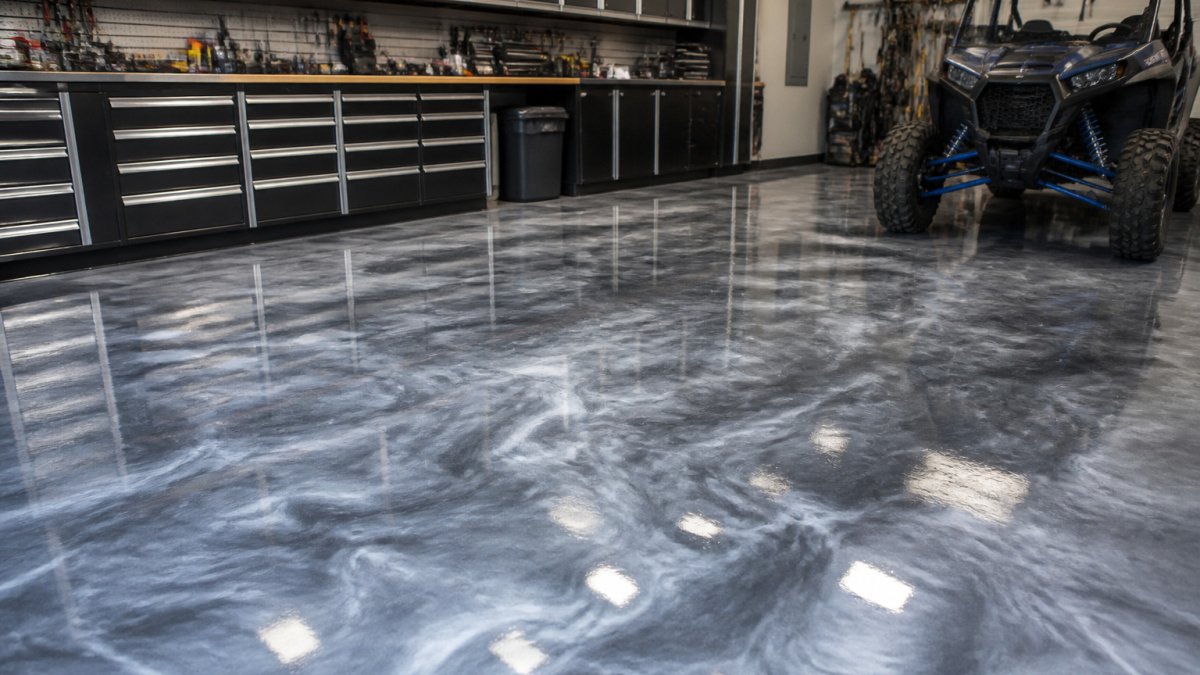
Metallic epoxy is a two-part resin coating that bonds to bare concrete and cures into a hard, seamless surface. The swirled, pearlescent effect is what most people notice first, but the real reason to choose it is what sits underneath the finish. Explore the metallic epoxy flooring options and finishes available for a workshop floor.
Metallic epoxy is a decorative topcoat built on a resin base. Metallic pigments are suspended in the resin and swirled as it is poured, which produces the depth and movement the finish is known for. The resin then seals the concrete, so oil and water sit on top instead of soaking in.
Watch out: Epoxy bonds only to clean, sound, properly profiled concrete. Oil, sealers or old paint left on the slab will cause the coating to lift later, so the preparation stage matters as much as the product.
Durability Under Tool Drops, Vehicle Loads and Machinery Vibration
- Expect small chips from heavy drops, especially on edges and corners
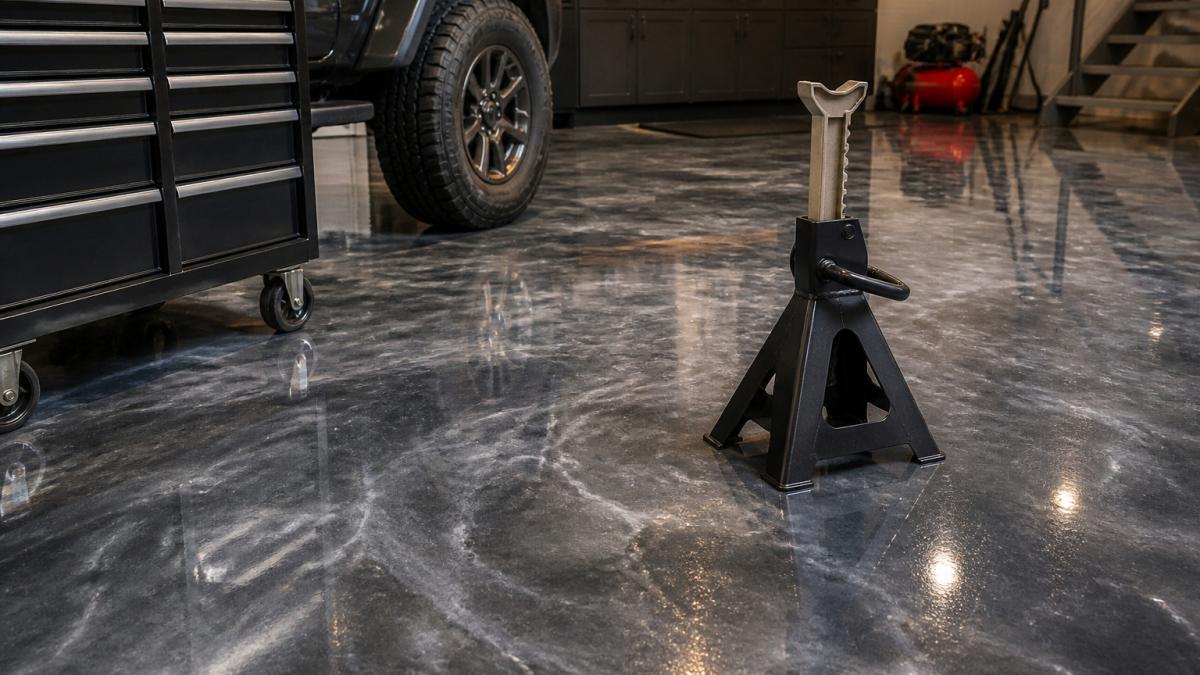
- Use rubber pads under jack stands and axle stands to spread point loads
- Check the slab for cracks and hollow spots before installation, since movement telegraphs through the finish
- Allow full cure time before parking hot vehicles, and consider a polyaspartic topcoat in warm climates
- Protect welding areas with a blanket or sacrificial plate
The points below summarise what to expect from a metallic epoxy floor under daily workshop use.
| Concern | Recommended action | Note |
|---|---|---|
| Tool drops | Expect small chips | Most likely on edges and corners |
| Jack and axle stands | Use rubber pads | Spreads point loads |
| Slab condition | Check for cracks and hollow spots | Movement shows through the finish |
| Parking vehicles | Allow full cure time first | Consider polyaspartic topcoat in warm climates |
| Welding | Protect areas | Use a blanket or sacrificial plate |
Chemical, Oil and Stain Resistance for Hobby Workshops
A common mistake is assuming every cleaner is safe. Harsh alkaline cleaners and acetone-based products can dull or etch the finish over time. A mild detergent and warm water is usually enough for routine cleaning.
Metallic Epoxy Flooring Pros and Cons
Pros:
- Seamless surface that is easy to sweep and mop
- Good resistance to oil, most chemicals and everyday wear
- Decorative finish that hides minor concrete imperfections
- Can brighten a dark garage through light reflection
Cons:
- Installation takes several days, and the garage is out of use during curing
- Chips can occur under heavy impacts and need repair
- UV exposure can yellow some clear topcoats over time
- The finish can feel slick when wet unless an anti-slip additive is included
Metallic Epoxy vs Flake Epoxy and Polished Concrete
For a home garage, the choice usually comes down to appearance preference, how the space is used and how much you want to spend. Ask each installer for the preparation method, the number of coats, the topcoat type and the expected recoating interval so the comparison is like for like.
Slip-Resistant Epoxy Flooring: Wet and Oily Conditions
Watch out for a gloss finish in areas that stay damp. A floor that looks fine when dry can become hazardous after a spill, so consider a textured or anti-slip finish wherever water or oil is likely.
Keeping a Metallic Epoxy Floor Maintained and Planning Your Installation
When you are ready to plan, see our services or contact us to request a quote and ask questions about your space.
Frequently Asked Questions
What are the benefits of metallic epoxy flooring in a garage workshop?
Metallic epoxy forms a seamless, hard-wearing surface that resists oil, many common chemicals and everyday abrasion, so it is easier to clean than bare concrete. The metallic pigments create a glossy, marbled finish that brightens a dim workshop. Because the coating is bonded to the slab, spills wipe up rather than soaking in. Results depend on correct concrete preparation and a properly applied topcoat, so ask any installer to explain their prep process before you commit.
Does metallic epoxy make a garage floor slippery?
A glossy metallic epoxy can be slippery when wet or contaminated with oil, particularly on a smooth finish. Many installers add an anti-slip additive or a textured topcoat to improve grip. Ask for the slip rating or the additive specification before the work starts, and test a sample area with wet shoes and a little water. Clean up spills promptly, because any coating loses grip once a film of oil builds up on the surface.
How does metallic epoxy compare with flake epoxy for a workshop?
Metallic epoxy produces a fluid, marbled look with a glossy surface, while flake epoxy scatters coloured chips through the coating for a more textured, forgiving appearance. Flake systems tend to hide small scratches and dust more easily, but metallic finishes look more striking and are often chosen for showrooms and display areas. Both bond to properly prepared concrete. Choose based on how the space will look and how much visual wear you expect.
How do I maintain a metallic epoxy floor in a garage?
Sweep or vacuum grit regularly, since trapped particles can scratch the surface over time. Clean spills promptly with a pH-neutral cleaner rather than harsh solvents, and avoid abrasive pads that dull the gloss. Periodic re-coating with a compatible topcoat can refresh the finish and restore slip resistance. Keep a record of the product used so any future repair or recoat is matched correctly.
