Last Updated: October 29, 2026
Quick Summary
Restoring shine to dull epoxy garage floors starts with diagnosis, not mopping: if regular mopping has stopped working, the dullness sits below the surface and professional buffing is the standard method. Buff with a soft pad every 6 to 12 months on an intact coating, and apply a fresh clear topcoat when the finish is worn.
- Acidic and ammonia-based cleaners cause permanent chemical etching and hazing on cured epoxy.
- Run a patch test on a hidden 300 mm × 300 mm area and wait 24 hours before full-slab use.
- Sweep and dust mop before buffing so grit is not ground into the finish.
- Water no longer beading and faster scuff marks are signs your floor needs a topcoat.
- In winter, sweep the entry zone daily and rinse the first metre inside the door more often.
Table of Contents
- Diagnosing Dull Epoxy Garage Floors Before You Restore Them
- The Best Cleaning Products for Epoxy Floors
- Step-by-Step Cleaning to Lift Grime Without Damaging the Finish
- Buffing and Polishing Techniques That Bring Back the Gloss
- How to Remove Scratches from Epoxy Garage Floors
- Signs Your Epoxy Floor Needs a Topcoat
- Your Epoxy Floor Maintenance Schedule for Long-Term Shine
- Booking a Professional Restoration Assessment
- Frequently Asked Questions
Diagnosing Dull Epoxy Garage Floors Before You Restore Them
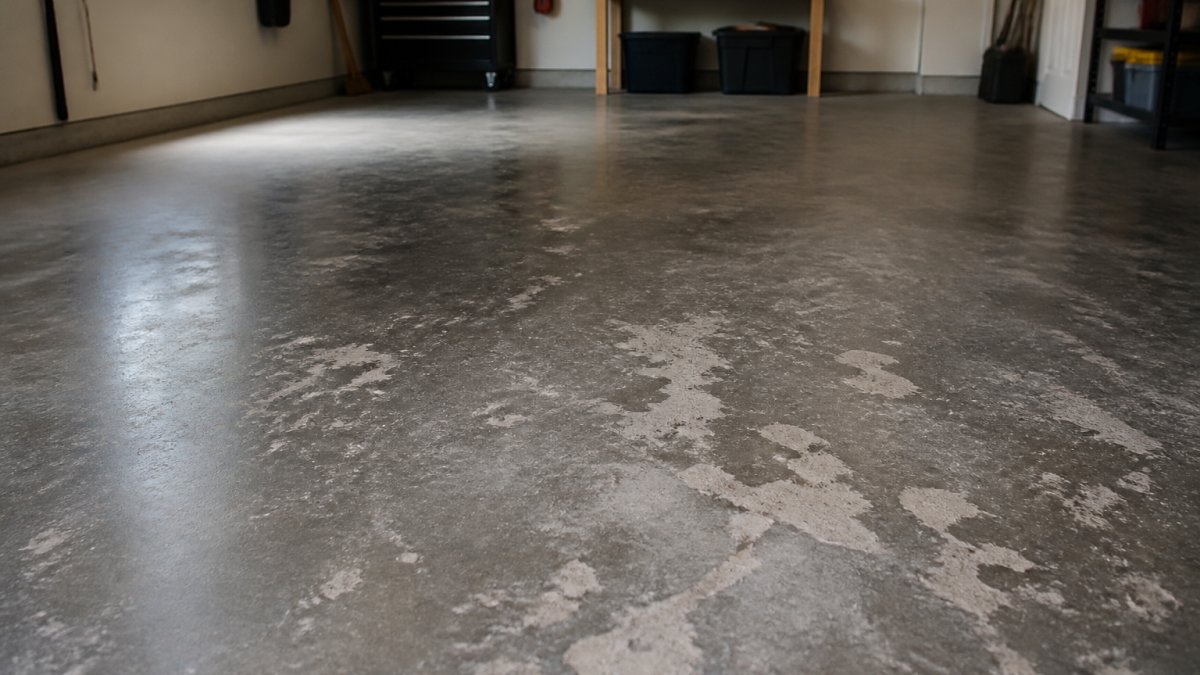
Most dull epoxy garage floors are not dirty. They are damaged, and that distinction decides whether a mop fixes the problem or wastes your weekend. At Garage Floor Coatings, we have over 20 years of industry experience.
Restoring shine to dull epoxy garage floors starts with a diagnosis, not a mop bucket. Industry guidance from KC Garage Floor’s 2026 maintenance guide notes that professional buffing is the standard method when regular mopping stops working, which tells you something important: if mopping has failed, the problem sits below the surface.
Surface Grime Versus Coating Failure
Coating failure is different. The dullness is baked in. You will see one or more of these:
- Micro-scratches that scatter light instead of reflecting it
- Chemical etching from acidic or ammonia-based cleaners
- Delamination at the edges, where the coating lifts
- Hot tire pickup marks that will not wipe away
If a fingernail catches on the damage, it is physical. No cleaner will fix it.
The Best Cleaning Products for Epoxy Floors
The best cleaning products for epoxy floors are pH-neutral, ammonia-free, and free of citrus or vinegar. Industry guidance explicitly warns that acidic and ammonia-based cleaners cause chemical etching and hazing on cured epoxy, and that damage is permanent. But the more useful question is not which bottle to buy, it is which bottle is safe on your specific coating, because epoxy systems vary in cure age, topcoat chemistry and flake loading.
Why these chemistries attack cured epoxy
Cured epoxy is a cross-linked thermoset. Strong alkalis such as ammonia saponify residual surface oils and slowly dull the gloss layer; acids and citrus solvents (d-limonene) soften the topcoat and leave a chalky haze that looks identical to oxidation. Soap-based cleaners leave a surfactant residue that attracts grit and creates the grey film most homeowners mistake for coating failure. None of these reactions announce themselves immediately, damage accumulates over repeated mopping cycles, which is why the floor looks fine for months and then suddenly does not.
Run a patch test before you commit
Most guides skip this step. Do not. Before using any new cleaner across the whole slab:
- Pick a hidden 300 mm × 300 mm patch, ideally near a wall or under a shelf.
- Apply the product at its recommended dilution and leave it for the full dwell time stated on the label.
- Wipe dry with a clean microfiber cloth and let the patch cure for 24 hours.
- Compare gloss and colour against an adjacent untreated patch under the same light.
- Check for tackiness, hazing, or a ring at the patch edge.
If the patch looks duller, tacky, or discoloured, the product is incompatible with your topcoat, stop and choose a different chemistry. A patch test costs ten minutes and a few cents of product; a failed full-slab clean can cost a recoat.
What belongs in your cupboard
Skip the vinegar. Skip the citrus. Skip anything labelled “heavy-duty degreaser” unless it states it is epoxy-safe and you have patch-tested it.
Eco-friendly alternatives that actually work
For readers who want the right products without the guesswork, our cleaning and sealing service covers both the clean and the protective seal in one visit, including a compatibility check against your existing coating.
Step-by-Step Cleaning to Lift Grime Without Damaging the Finish
Deep cleaning removes surface contaminants without mechanical abrasion. Follow this sequence and you will lift grime without dulling the finish further.
- Clear the floor. Remove everything and sweep with a soft-bristled broom.
- Dust mop the whole slab to remove abrasive debris before it scratches.
- Pre-treat stains. Apply a diluted degreaser to oil and hot tire pickup marks. Wait five minutes.
- Wash in sections. Use a pH-neutral cleaner and a microfiber mop. Change the water often.
- Rinse. Clean water only, to remove detergent residue.
- Dry fully. Air movement, not heat.
Detergent residue is the quiet culprit. Left behind, it attracts dirt and creates a hazy film that looks exactly like dullness.
Buffing and Polishing Techniques That Bring Back the Gloss
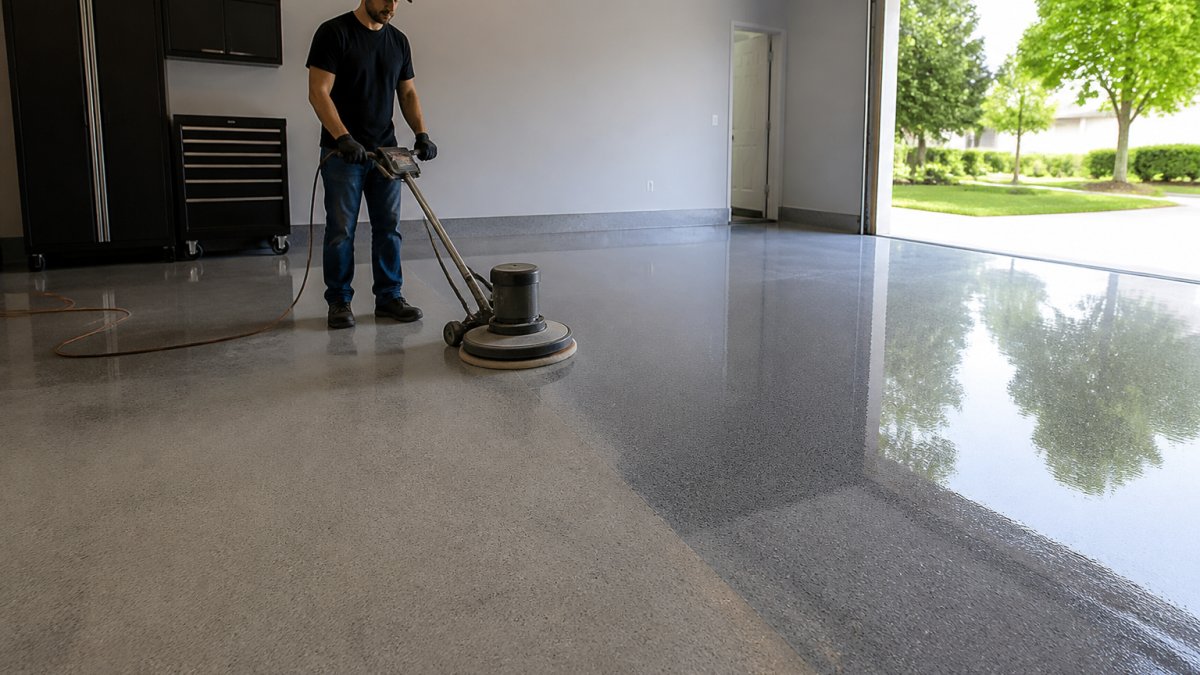
Watch out: buffing a floor with grit still on it grinds that grit into the finish. Sweep and dust mop first, every time.
How to Remove Scratches from Epoxy Garage Floors
Test on a small hidden patch first. If the scratch stays visible after two passes, stop. That is a coating problem, not a cleaning problem, and it needs a topcoat or a recoat.
Signs Your Epoxy Floor Needs a Topcoat
Other signs:
- Colour looks washed out compared to edges
- Water no longer beads
- Scuff marks appear faster than before
- Faint delamination at seams and walls
A fresh clear topcoat restores shine and adds a new protective layer. Readers whose coating is failing can explore our garage epoxy flooring service to restore or recoat it. Industry guidance from SLG Concrete Coatings confirms that applying a new clear topcoat is the primary solution for worn or dull coatings. A water-based topcoat suits residential garages; polyurethane sealer gives more chemical resistance. Readers weighing a recoat can review our polyaspartic flooring option for a durable topcoat.
Your Epoxy Floor Maintenance Schedule for Long-Term Shine
An epoxy floor maintenance schedule keeps gloss retention high and delays the day you need a recoat. Epoxy systems are designed to last 10 to 30 years when properly maintained, according to Ascent Epoxy’s 2026 flooring guide, and maintenance is the variable you control. But a fixed calendar is only half the story, the schedule that protects a floor in a cool, shaded garage will not protect one that bakes in summer sun and swings through winter condensation cycles.
The baseline schedule
| Frequency | Task | Purpose |
|---|---|---|
| Weekly | Dust mop or soft-bristled broom | Remove abrasive debris before it scratches |
| Weekly to fortnightly | pH-neutral mop | Lift surface grime |
| Monthly | Spot-treat oil and hot tire pickup | Prevent staining and localised etching |
| Quarterly | Deep clean and rinse | Remove detergent residue |
| Every 6-12 months | Buff with a soft pad | Restore gloss on an intact coating |
| As needed | Clear topcoat | Replace worn protective layer |
How environmental factors change the schedule
This is the part most guides leave out, and it is where gloss is actually won or lost.
Humidity and condensation. Garages are poorly ventilated by design. In humid months, warm daytime air meets a cooler slab and condenses on the surface. Repeated condensation cycles drive moisture into micro-pores and seams, and the resulting haze looks like dullness but is actually early moisture ingress. In high-humidity periods, increase dust mopping to twice weekly and run a dehumidifier or ventilate the garage during the day where possible. Never mop a floor that is already damp from condensation, you will drive moisture deeper.
UV exposure. If your garage has windows or an open carport edge, direct sun will oxidise the topcoat faster on the exposed side. That is why the colour often looks washed out near the door and rich at the back wall. Rotate any buffing schedule toward the sun-exposed zone, and consider a UV-stable topcoat at the next recoat rather than a standard clear.
Temperature swings. Epoxy expands and contracts with the slab. Wide day-night swings, common in spring and autumn, stress seams and edges first. Check seams monthly during those seasons, a hairline lift caught early is a spot repair; caught late it is a recoat.
Winter road salt and grit. Salt is abrasive and hygroscopic. In winter, sweep the entry zone daily rather than weekly, and rinse the first metre inside the door more often. Do not use calcium chloride de-icers on the slab; sweep them up and dispose of them off the floor.
Adjust the schedule to how the garage is used
Before scheduling any work, check our guide to garage flooring downtime and cure times so you know how long the space is out of action.
Booking a Professional Restoration Assessment
Some dullness is cosmetic. Some is the early stage of failure, and the two look nearly identical in a photo. A professional assessment separates them before you spend money on the wrong fix.
At Garage Floor Coatings, we bring over 20 years of industry experience. We use epoxy, polyurethane, and flake systems for tailored flooring solutions, with meticulous attention to detail from consultation to final finish.
If you are ready to stop guessing, contact us to book your restoration assessment.
Frequently Asked Questions
Why does my epoxy garage floor look cloudy?
Cloudiness can have different causes. If you are unsure what is causing it, seek an assessment before choosing a remedy.
Can you buff epoxy floors to bring back the shine?
The verified business information does not specify whether buffing is offered or what results it achieves. Contact Garage Floor Coatings to discuss your floor.
Does vinegar damage epoxy garage floors?
The verified information does not specify which cleaners are suitable for epoxy floors. Check with the coating provider before choosing a cleaner.
How often should epoxy floors be polished?
The verified information does not specify how often epoxy floors should be polished or what maintenance schedule to follow. Contact Garage Floor Coatings for advice about your floor.
Dull epoxy is rarely a cleaning failure. It is usually a coating telling you it needs attention, and the earlier you act, the cheaper the fix. Get started with Garage Floor Coatings and restore the gloss your garage floor was built to hold.
