Last Updated: October 31, 2026
Quick Summary
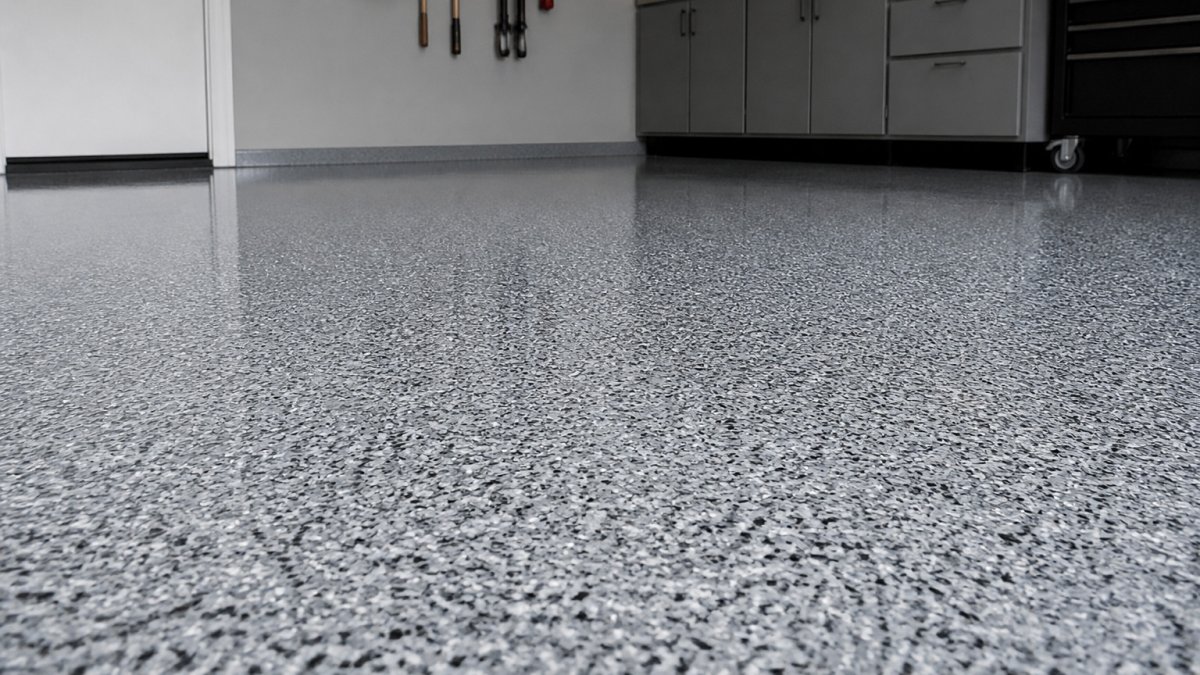
A polyaspartic floor coating typically lasts about 15 to 20 years in a residential garage with light traffic, and 5 to 10 years in commercial workshops or wash-down areas. Lifespan depends on surface preparation, coating thickness, traffic, chemical exposure and routine maintenance.
- Residential garages with light vehicle traffic commonly reach 15 to 20 years.
- Heavy daily use or workshop settings typically last 10 to 15 years.
- Commercial warehouses and food-processing areas generally last 5 to 10 years.
- Proper surface preparation and a multi-coat system strongly influence how long the floor lasts.
- Sweep weekly, wipe spills promptly and clean with a pH-neutral cleaner to extend life.
Table of Contents
- What Lifespan Actually Means for a Polyaspartic Floor
- Expected Service Life by Setting and Coating System
- Factors That Shorten or Extend Coating Life
- Polyaspartic vs Epoxy Flooring: How Their Lifespans Compare
- How Long Does Epoxy Flooring Last in Comparison
- Polyaspartic Floor Coating Maintenance to Protect Its Lifespan
- Cure Time and When You Can Use a New Polyaspartic Floor
- Booking Your Garage Floor Assessment for a Longer-Lasting Finish
- Frequently Asked Questions
What Lifespan Actually Means for a Polyaspartic Floor
Homeowners, workshops and commercial clients often ask how long a polyaspartic finish will last, and the first question is almost always how long the finish will last. The honest answer depends on what you mean by “last.” A polyaspartic floor can still look sharp long after its useful protection has worn away, so lifespan should be measured by performance, not appearance.
Lifespan usually means three things:
- Protection: the coating still resists abrasion, staining and moisture.
- Appearance: the colour and gloss remain acceptable.
- Adhesion: the coating stays bonded to the concrete without peeling or bubbling.
A floor can fail on any one of these before the others. Scuffing and dulling often show up first, while adhesion failures usually point to a preparation problem rather than the coating itself.
Expected Service Life by Setting and Coating System
Published lifespan figures vary by setting, and the variation is large enough that a single number is misleading. Lifespan figures vary by setting, because commercial floors typically face heavier traffic, more chemical exposure and more impact. A single lifespan figure should not be applied to every floor.
A more useful way to read those ranges is to separate what is being claimed. Manufacturer data sheets typically state a service life under defined test conditions, while installer estimates reflect real-world experience with local concrete, climate and traffic. The two rarely match exactly, and neither is a guarantee. Treat any figure as a planning range, not a warranty.
The table below gives qualified estimates by setting, based on common installer experience and published contractor guidance. These are planning ranges, not promises, and they assume a full system applied to properly prepared concrete.
| Setting | Typical service life (full system) | Main drivers |
|---|---|---|
| Residential garage, light vehicle traffic | 15 to 20 years | UV exposure, hot tyres, occasional spills |
| Residential garage, heavy daily use or workshop | 10 to 15 years | Abrasion, dropped tools, chemical spills |
| Commercial workshop or warehouse | 5 to 10 years | Forklift traffic, impact, solvent exposure |
| Food-processing or wash-down area | 5 to 10 years | Thermal shock, cleaning chemicals, moisture |
| Showroom or retail, light foot traffic | 15 to 20 years | UV fading, scuffing at entries |
These ranges assume a multi-coat system with a primer, basecoat and topcoat. A single thin coat applied directly to concrete will generally sit at the lower end or below, regardless of the setting.
The coating system also matters. A complete system with a properly applied primer, basecoat and topcoat will generally outlast a single thin coat applied straight to poorly prepared concrete. Thickness is part of that: a system built up to the manufacturer’s specified film thickness resists abrasion and impact better than one applied thin to save product. Ask any installer what system they use, how many coats they apply, and what film thickness they target.
Finally, distinguish the three things a lifespan figure can refer to. A floor may keep its appearance for 15 years while its protective performance has already declined, or it may still protect the concrete while looking tired. When you compare quotes, ask whether the stated lifespan refers to appearance, protection, or time until a recoat is needed. That single question makes installer claims far more comparable.
Factors That Shorten or Extend Coating Life
Several factors decide whether a floor reaches the upper or lower end of its range.
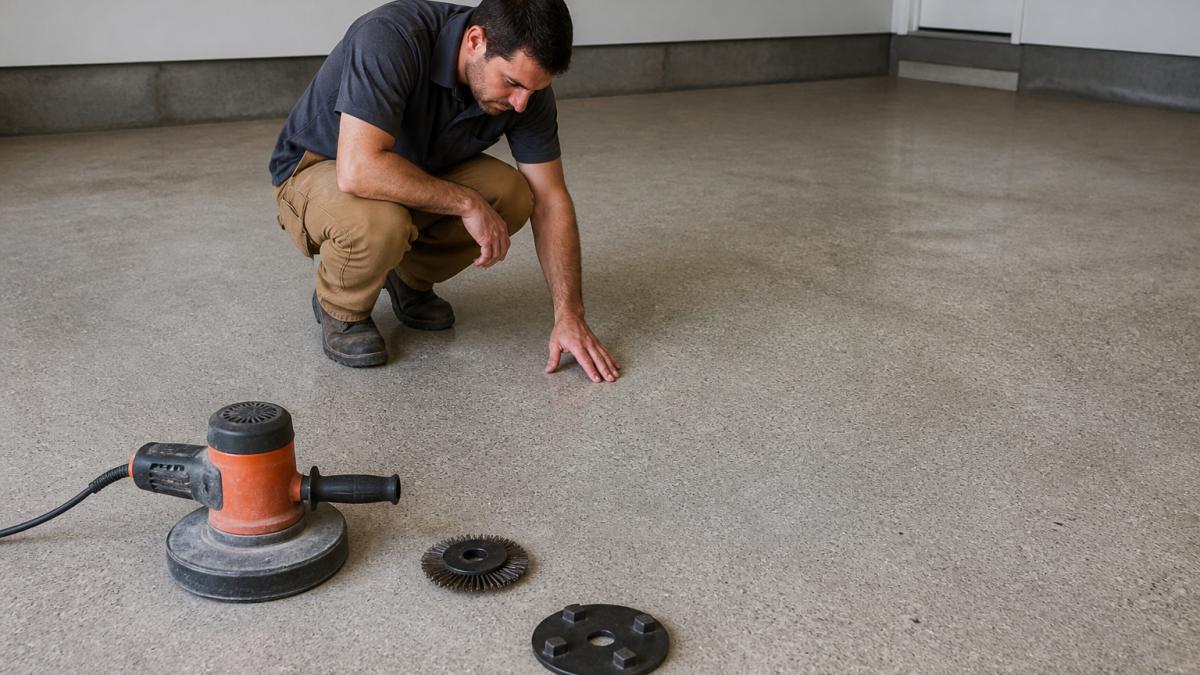
Surface preparation. Lifespan depends heavily on how the concrete is prepared. Grinding, cleaning and profiling the surface give the coating a firm bond.
Coating thickness and system composition. A system built from several correctly applied layers resists wear better than one thin coat. Ask any installer what system they use and how many coats they apply.
Traffic and loading. Hot tyres, dragged equipment and dropped tools all wear a floor faster. A garage used for daily parking will age differently from a workshop with heavy tool use.
Chemical exposure. Oils, fuels and harsh cleaners attack a coating over time. Wiping spills promptly makes a measurable difference.
Sunlight and moisture. Direct sun can slowly change colour, and persistent damp can affect adhesion if the slab is not properly sealed beforehand.
Installation quality. Lifespan claims are conditional on proper application. Mixing ratios, temperature and recoat timing all matter.
Maintenance also extends life, which we cover below.
Polyaspartic vs Epoxy Flooring: How Their Lifespans Compare
Polyaspartic and epoxy floors are often compared on durability. You can view our epoxy resin floor options to see how that system is applied. Several factors determine how long each system lasts in service.
UV stability. Polyaspartic coatings generally offer better UV stability, so they resist yellowing and colour fading more effectively than standard epoxy. This is one reason they are often chosen for garages and showrooms where the floor is visible and exposed to sunlight. Standard epoxy is more prone to yellowing when exposed to UV light over time, which affects appearance long before it affects protection.
Wear and chemical resistance. Epoxy is still a strong performer for many applications, and it offers good resistance to many chemicals.
Cure time and downtime. Cure times vary by system, and they affect how long a space is out of use.
Total cost over service life. The purchase price is only part of the picture. Compare quotes on the basis of expected years of service, likely maintenance and the cost of a recoat, not just the rate per square metre.
| Factor | Polyaspartic | Epoxy |
|---|---|---|
| UV / colour stability | Better | More prone to yellowing |
| Cure and return to service | Fast | Slower |
| Wear resistance | Good | Good |
| Typical residential service life | 15 to 20 years | Comparable in sheltered indoor settings |
| Likely maintenance | Topcoat recoat to restore appearance | Recoat sooner if yellowing matters |
The right choice depends on the use case. Visible, sun-exposed floors favour polyaspartic. Some interior applications may not need its additional UV resistance, and epoxy can be the more economical choice where appearance under sunlight is not a concern.
Whichever system you choose, the lifespan you achieve depends on the preparation and maintenance factors described above. A well-prepared epoxy floor will outlast a poorly applied polyaspartic one, so installation quality matters more than the label on the bucket.
How Long Does Epoxy Flooring Last in Comparison
Epoxy flooring is often cited with a lifespan similar to polyaspartic in comparable conditions, but published figures are less consistent. You can see our garage epoxy flooring for a system suited to your own project. The main differences are in UV behaviour and cure time rather than raw wear resistance. Epoxy suits indoor areas with limited sun and where a lower price matters. For a garage that gets daylight through an open door, the colour stability of polyaspartic usually justifies the higher cost.
Whichever system you choose, the lifespan you achieve depends on the preparation and maintenance factors described above.
Polyaspartic Floor Coating Maintenance to Protect Its Lifespan
Routine care helps extend the life of a polyaspartic floor coating. If you would rather have the work done for you, our cleaning and sealing service protects the coating. A simple schedule keeps the coating in good condition:
- Sweep or vacuum weekly to remove grit that can scratch the surface.
- Wipe spills promptly, especially oil, fuel and cleaning chemicals.
- Clean with a pH-neutral cleaner and a soft brush or mop. Avoid abrasive pads.
- Rinse residue so cleaning products do not build up and dull the finish.
- Check for early wear such as scuffing at door thresholds or under parked cars.
A common mistake is using strong degreasers on a routine basis. They can gradually dull the topcoat. Use them only on specific stains.
Damage prevention is equally important. Use protective pads under heavy tool chests and jacks, and avoid dragging metal objects across the floor.
When wear does appear, repair decisions depend on whether the damage is cosmetic or has reached the bond with the concrete.
Cure Time and When You Can Use a New Polyaspartic Floor
Cure times depend on temperature, humidity, coating thickness and the specific product. Ask your installer for the expected timeline for your system.
Avoid parking heavy vehicles or moving heavy equipment until the manufacturer’s full cure window has passed, because the coating is still gaining its final hardness. Rushing this step can leave marks that are difficult to remove.
Plan around the cure schedule before installation day, and ask your installer for the expected timeline for your specific system. Our full cure times guide explains the downtime in detail.
Booking Your Garage Floor Assessment for a Longer-Lasting Finish
A floor lasts longest when the preparation, system and maintenance plan suit how the space is used. If you want a clear view of what your floor needs, contact Garage Floor Coatings for an assessment or a quote, and visit our website for current information.
Frequently Asked Questions
How long does polyaspartic floor coating last?
Lifespan depends on the setting as much as the product, and heavy commercial traffic shortens it. Ask for the expected service life for your specific use before you commit.
Does polyaspartic go over epoxy?
Adhesion to existing surfaces depends on the epoxy being well bonded, clean and suitably profiled. Peeling or delamination often comes from poor preparation rather than the topcoat itself. A professional assessment can confirm whether the existing surface is sound enough to take a new system.
Can polyaspartic floor coating peel or scratch?
Polyaspartic can peel or chip when the concrete was not prepared properly, the primer or basecoat was poorly applied, or moisture was trapped beneath the coating. Scratches are more likely with abrasive grit or dragged metal objects. Regular cleaning with a neutral pH cleaner and prompt attention to chips help prevent small damage from becoming larger failures.
How soon can you walk or drive on a polyaspartic floor?
Polyaspartic cures quickly, so light foot traffic is often possible within a short period after application. Full vehicle use usually needs a longer cure window, and the exact timing depends on coating thickness, temperature and humidity. Follow the installer’s written cure schedule rather than relying on a general rule.
