Last Updated: November 1, 2026
Quick Summary
For paint spill removal on epoxy flooring, blot wet paint with a cloth instead of wiping, then wash the residue with warm water and mild detergent. Only use a solvent like isopropyl alcohol after a patch test, and never scrape with metal tools that scratch the finish.
- A wet spill cleaned within five minutes usually needs only warm soapy water.
- Press a cloth over the spill and work from the outside inwards to avoid smearing paint.
- Dampen a cloth with isopropyl alcohol and hold it on dried paint for one minute to soften it.
- Patch test at least 300 mm from the spill and wipe a 50 mm square for 10 to 15 seconds.
- Avoid acetone, paint thinner, metal scrapers, steel wool and steam mops on epoxy floors.
Table of Contents
- Why Paint Spills on Epoxy Flooring Need Fast, Careful Action
- Step-by-Step: How to Remove Paint Spills from Epoxy Flooring
- How to Remove Dried Paint from Epoxy Floors
- How to Remove Spray Paint from Epoxy Flooring
- Safe Cleaners for Epoxy Floors: What Works and What to Avoid
- What Not to Use on Epoxy Floors
- Cleaning Up Safely: Ventilation, Protective Gear and Disposal
- When to Call a Professional for Epoxy Floor Repairs
- Frequently Asked Questions
Why Paint Spills on Epoxy Flooring Need Fast, Careful Action
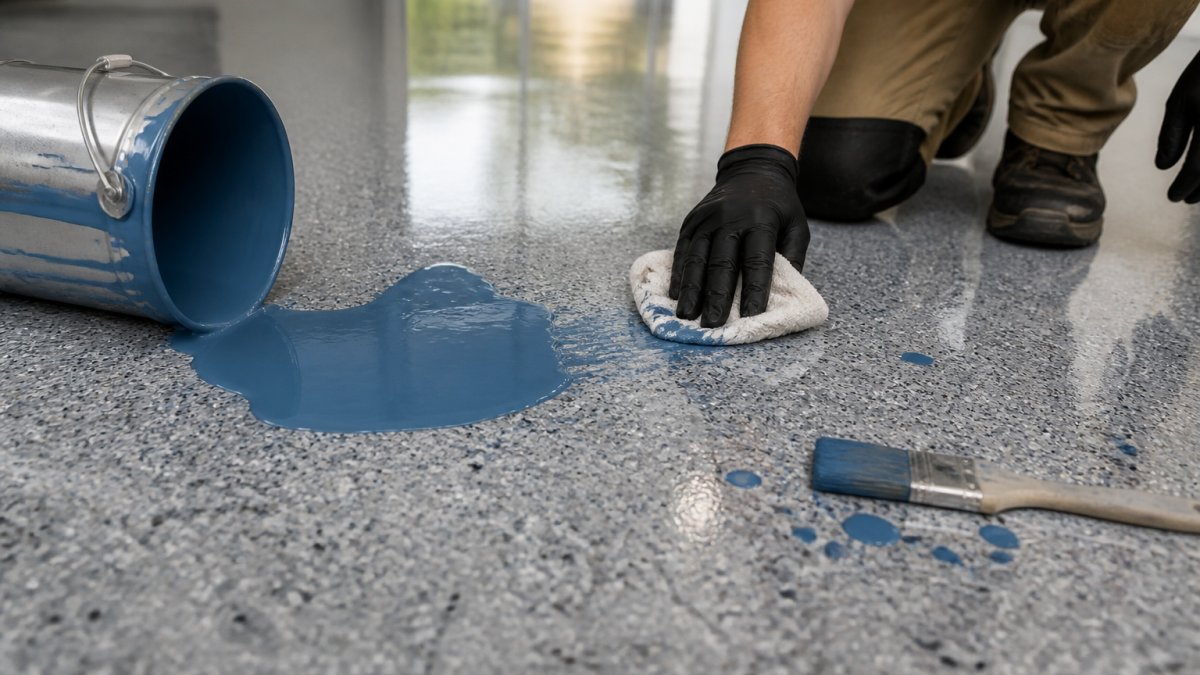
A paint spill on an epoxy floor is a race against time.
This guide from Garage Floor Coatings covers paint spill removal from epoxy flooring without wrecking the finish.
Epoxy floor coating is a hard, resin-based surface. It resists wear, stains and many chemicals.
Speed matters for two reasons. First, fresh paint sits on top of the surface. Second, the longer a spill sits, the more chance it has to seep into seams, cracks or a worn topcoat.
The good news: most household paint spills come up easily if you act in the first few minutes.
If you want to understand the surface you are protecting, our epoxy resin floor overview explains how the coating is built and why prompt action protects it. Cure time matters too, and our guide to garage flooring downtime explains how long a new floor needs before it is fully hard.
Step-by-Step: How to Remove Paint Spills from Epoxy Flooring
Paint spill removal comes down to four steps: identify the paint, blot it up, wash the residue, and test a solvent only if you need one. Work from the gentlest method up, and stop as soon as the floor is clean.
Here is the order we recommend.
Step 1: Identify the Paint Type and Whether It Is Wet or Dried
The right method depends on two things: what kind of paint spilled, and whether it is still wet. Water-based paint is far easier to remove than oil-based or spray paint.
Check the label on the tin. Common types you will meet:
- Water-based and acrylic paint: lifts with warm water and mild detergent
- Oil-based enamel: needs a solvent such as isopropyl alcohol
- Spray paint: dries fast and often needs a solvent plus gentle scraping
Test the spill with a fingertip in a glove. If paint transfers, it is wet. If it feels hard and dry, move to the dried-paint method below.
Use this quick decision guide before you touch the spill:
- Water-based or acrylic, still wet: blot, then warm soapy water. No solvent needed.
- Water-based or acrylic, tacky or dried: warm soapy water and a plastic scraper first; only try isopropyl alcohol if a film remains.
- Oil-based enamel, still wet: blot immediately, then isopropyl alcohol on a cloth after a patch test.
Step 2: Blot and Lift Excess Paint Without Spreading It
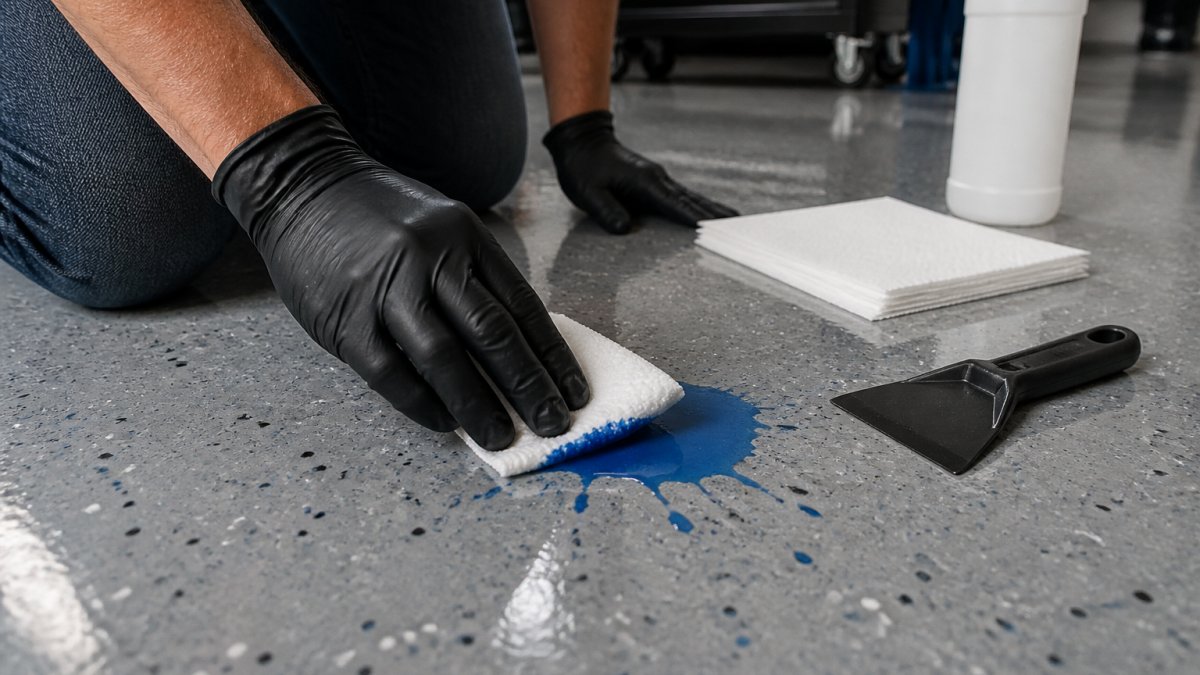
Press, do not wipe. A soft cloth or paper towel laid over the spill and pressed down lifts paint without smearing it across the floor.
Work from the outside of the spill inwards. Swap to a clean cloth as soon as one is loaded with paint.
Never use a metal scraper or steel wool. Both cut into the epoxy finish and leave scratches that trap dirt.
Step 3: Clean Residue with Warm Water and Mild Detergent
Once the bulk is gone, wash the area with warm water and a few drops of mild detergent. Use a soft cloth and a light circular motion.
Rinse with clean water and dry the spot with a cloth. This step removes the thin film of paint residue that blotting leaves behind. It also shows you whether any paint is still bonded to the surface.
Step 4: Test a Solvent on an Inconspicuous Area First
If a stubborn stain remains, try a solvent. Isopropyl alcohol is the safest first choice for most paints.
Always do a patch test first. Pick a spot that is out of sight, such as behind a shelf or near a wall edge.
Apply the solvent to your cloth, not the floor. Let it dwell for a short time, wipe, then rinse with water.
Timing matters more than strength. A wet spill cleaned within five minutes usually needs only warm soapy water. Tacky paint cleaned within an hour may need a short alcohol dwell. Fully cured paint left for a day or more needs the dried-paint method and patience, not a stronger solvent.
Match the paint type and its state to the gentlest method that works, then step up only if needed.
| Paint type and state | First method | If paint remains |
|---|---|---|
| Water-based or acrylic, still wet | Blot, then warm soapy water | No solvent needed |
| Water-based or acrylic, tacky or dried | Warm soapy water and plastic scraper | Isopropyl alcohol if a film remains |
| Oil-based enamel, still wet | Blot immediately | Isopropyl alcohol on a cloth after patch test |
| Oil-based enamel, dried | Isopropyl alcohol dwell for one minute | Plastic scraper, repeat in small sections |
| Spray paint, still wet | Blot with paper towel straight away | Do not wipe |
| Spray paint, dried | Isopropyl alcohol or dedicated paint remover | Apply sparingly after a patch test |
| Two-part or epoxy paint | Treat as a professional job if cured | Do not use aggressive solvents |
How to Remove Dried Paint from Epoxy Floors
Dried paint needs patience, not force. The goal is to soften the paint without softening the epoxy underneath.
Start by softening the edge with warm, soapy water.
For paint that will not budge, dampen a cloth with isopropyl alcohol and hold it on the spot for a minute.
Watch out: picking at dried paint with a fingernail, knife or scraper corner chips the coating.
How to Remove Spray Paint from Epoxy Flooring
Spray paint is the hardest common spill to remove.
Act while the mist is still wet if you can. Blot it up with a paper towel straight away.
Overspray is a common problem. A fine haze of spray paint can drift across a whole floor.
If the spray paint has been down for days, call a professional before you try strong solvents.
Safe Cleaners for Epoxy Floors: What Works and What to Avoid
The safest cleaners for epoxy floors are warm water, mild detergent and isopropyl alcohol used sparingly. These lift most spills without harming the coating.
What works well:
- Warm water with a few drops of mild dish detergent
- Isopropyl alcohol for oil-based and spray paint, after a patch test
- Soft cloths and paper towels for blotting
What to avoid:
- Acetone and paint thinners on a regular basis
- Bleach, ammonia and abrasive powders
- Metal scrapers, steel wool and stiff brushes
For a full rundown of products and methods that protect the finish, see our cleaning and sealing guide. It covers day-to-day care as well as spill clean-up.
What Not to Use on Epoxy Floors
Some products do more damage than the spill itself. Strong solvents are the biggest risk. Acetone, paint thinner, turpentine and methylated spirits can all dull or soften an epoxy finish if left too long.
Also avoid:
- Abrasive cleaners and scouring pads: these scratch the gloss
- Steam mops: heat and moisture can lift the coating at seams
- Wire brushes and metal scrapers: these gouge the surface
A common mistake is reaching straight for the strongest solvent. In practice, most fresh spills come up with warm soapy water. Save the solvent for the stubborn cases, and always patch test first.
How Solvents Interact with Epoxy Coatings
Epoxy is a thermoset resin. Once cured, it is cross-linked and resistant to many chemicals, but it is not immune to organic solvents. The risk is not usually a single wipe; it is contact time and concentration.
- Isopropyl alcohol: generally the lowest-risk solvent for spot work on cured epoxy. It evaporates quickly, which limits dwell time. Short wipes with a cloth dampened, not soaked, are generally considered lower risk after a patch test.
- Acetone: a stronger solvent that can soften the surface if left pooling or if used repeatedly on the same spot. It evaporates fast, but the window between lifting paint and dulling gloss is narrow.
- Paint thinner, turpentine and methylated spirits: these can penetrate and swell the resin over longer contact. They are best avoided on decorative or high-gloss finishes unless a professional has confirmed compatibility.
Never mix solvents. Combining products such as acetone and alcohol, or adding water to a solvent, can create fumes, heat or unpredictable reactions. Use one product at a time, in a ventilated area, and dispose of cloths safely.
Patch-Test Protocol Before Any Solvent
A patch test is not a formality. It is the only way to know how your specific coating will react.
- Choose an inconspicuous spot at least 300 mm away from the spill, such as behind a shelf or near a wall edge.
- Dampen a clean white cloth with the solvent. Do not pour solvent directly onto the floor.
- Wipe a 50 mm square area with light pressure for 10 to 15 seconds.
- Wait five minutes, then inspect under good light for dulling, cloudiness, colour shift, tackiness or softening.
- If the surface looks unchanged, proceed to the spill using the shortest contact time that works. If there is any change, stop and try a gentler method or call a professional.
Short contact time beats strong chemistry. A cloth dampened with isopropyl alcohol and wiped for 10 to 15 seconds will lift most paint films without giving the solvent time to soften the epoxy. Flooding the floor or leaving a soaked rag on the spot is where most DIY damage happens.
Cleaning Up Safely: Ventilation, Protective Gear and Disposal
Open the garage door and let air move through before you start. Solvent fumes build up fast in a closed space.
Wear protective gloves and eye protection when handling any solvent. Keep children and pets out of the area until the floor is dry.
Dispose of paint-soaked cloths and paper towels carefully. Paint residue and solvent rags can be flammable, so do not pile them in a bin indoors.
When to Call a Professional for Epoxy Floor Repairs
Call a professional when the paint will not lift with gentle methods, or when the coating itself is damaged.
Signs it is time to get help:
- A stain that survives a patch-tested solvent
- Chipped or scratched coating around the spill
- A dull or cloudy patch that will not buff out
If the coating is worn or lifting, a spill can get under the surface and cause a bigger problem.
Garage Floor Coatings works with residential, workshop, commercial and showroom clients on epoxy, polyurethane and flake floor systems, tailored to the requirements of each space.
For a quote on a damaged floor, contact Garage Floor Coatings through its website. Call now!
Frequently Asked Questions
How do you remove dried paint from epoxy flooring?
For dried paint, soften the spill first. Apply a small amount of isopropyl alcohol or a dedicated epoxy-safe solvent to a cloth, dab it on the paint and let it dwell for a minute. Then lift the softened paint with a plastic scraper held at a shallow angle. Never use a metal scraper or putty knife, as it will gouge the epoxy finish. Wipe the area clean with warm soapy water and dry it thoroughly. Test any solvent on an inconspicuous area first to confirm it does not dull the coating.
What should you not clean epoxy floors with?
Avoid harsh acids, strong alkalis, bleach, ammonia, and abrasive scouring powders or steel wool. These can etch, dull or scratch the epoxy finish. Vinegar is acidic and can degrade the coating over time, so keep it off epoxy. WD-40 may lift some overspray but leaves an oily residue that can affect the topcoat, so use it sparingly and only after a patch test. Always check the product label and test on a hidden spot before applying anything stronger than mild detergent.
Can you use a scraper on an epoxy floor?
Yes, but only a plastic scraper or a scraper with a plastic edge. Hold it at a shallow angle and use light pressure to lift paint without digging into the coating. Metal scrapers, putty knives and razor blades can leave permanent scratches or gouges in the epoxy. For stubborn spots, soften the paint with a suitable solvent first, then scrape gently. Wipe the area clean afterwards and inspect for any dulling.
Which cleaners are safe to use on epoxy flooring?
Mild detergent mixed with warm water is the safest everyday cleaner. For paint residue, isopropyl alcohol or a solvent labelled safe for epoxy can be used after a patch test. Avoid acetone and strong paint thinners unless a professional confirms they are compatible with your specific coating, as they can soften or damage the epoxy. Always use soft cloths or non-abrasive pads, rinse with clean water and dry the floor to prevent water spots.
A paint spill does not have to mean a ruined floor. Act fast, match your method to the paint type, and test before you treat. When a spill has gone too far or the coating is already worn, Garage Floor Coatings can assess the damage and restore a hard-wearing finish with durable epoxy and polyurethane systems and a seamless process from consultation to final coat. Get started with Garage Floor Coatings and protect your floor for the long run.
