Last Updated: November 12, 2026
Quick Summary
The best garage floor coating for hot tyres is a well-prepared system, not a single product. Heat resistance, adhesion and topcoat quality must work together, since a strong coating on weak concrete will still fail under hot tyres.
- Heat from tyres can soften weak coatings, leaving dents, lifting or dark marks.
- Tyre rubber oils and plasticisers can migrate into the coating and stain it.
- Proper surface preparation, including grinding and profiling, matters as much as the coating itself.
- Epoxy bonds well and resists wear but can amber and soften under sustained heat.
- Keep hot tyres off the floor until the coating has fully cured.
Table of Contents
Hot tyres are one of the hardest tests a garage floor faces. A car that has just been driven, or a tyre left parked on the floor for a while, can soften some coatings and leave marks, pick-up or staining. Choosing the right coating starts with understanding why that happens.
Heat from a tyre is the main threat. Rubber carries heat into the coating, and softer systems can lose hardness, dent, or lift where the tyre sits. Tyre rubber also contains oils and plasticisers that can migrate into a coating and leave a dark mark. Many homeowners only notice this after the first hot summer, which is why the test is worth thinking about before you choose a product.
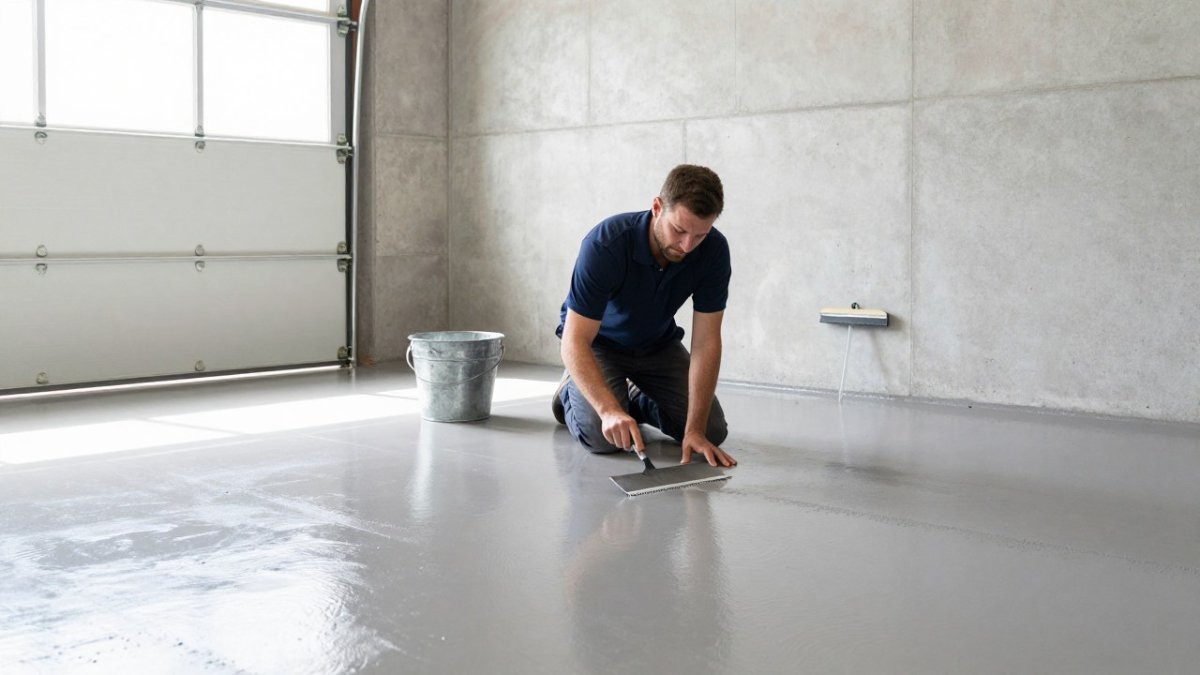
Poor adhesion causes a second kind of failure. If the concrete was not properly prepared, the coating can peel or bubble under heat and load, and a tyre that drags across a lifting edge makes the problem worse. Surface preparation, including grinding, profiling and removing contaminants, matters as much as the coating itself.
Heat resistance, adhesion and topcoat quality work best when treated as one system rather than three separate choices. A strong coating on weak concrete will still fail.
Watch out: parking a hot car on a freshly cured coating before it has fully hardened can leave tyre marks that look like permanent damage. Let the floor cure fully first.
Epoxy Garage Floor Coating: Strengths and Limits Under Hot Tyres
Epoxy is a common choice for garage floors because it bonds well to prepared concrete and produces a hard, glossy surface. Its hardness helps it resist scratching and everyday wear. The limitation is that standard epoxy can amber in sunlight and can soften under sustained heat from hot tyres, so it is not always the strongest choice for a car that is driven in straight from a warm drive.
There is also a contrary view in the sources we reviewed. One materials supplier, McKinnon Materials, “Garage Floor Coating: How to Choose the Right System”, describes epoxy as one of the toughest options against hot tyres. The same source contrasts that with epoxy’s tendency to amber, and the results do not establish a single best coating. The honest conclusion is that epoxy performs well in many garages, but its heat resistance depends on the exact formulation and how it is installed.
Ask your installer which epoxy formulation they use and whether it is rated for heat and tyre contact.
Polyurethane Garage Floor Coating for Heat and Wear
Polyurethane is often used as a topcoat over epoxy or as a standalone floor system.
Polyaspartic Garage Floor Coating: Fast Cure, Hot-Tyre Performance
When comparing coating systems, consider the full system: the primer, the coating thickness and the topcoat. Ask your installer for the product data sheet so you can check the heat and abrasion ratings for the exact product being used.
Garage Floor Coating Cure Time Before Parking Your Car
Cure time is one of the most common questions homeowners ask. A coating can still be soft in its early stages, whatever the system. Parking a car too early risks tyre marks and dents that may not come out.
As a general rule, follow the manufacturer’s cure schedule for both light use and vehicle use, and keep hot tyres off the floor until the full cure is complete. Heat and humidity during the cure can change timing, so do not rely on the surface feeling dry.
How to Remove Tyre Marks From Epoxy Floors
Tyre marks on epoxy often come from rubber transfer and oils rather than from damage to the coating. Start with a pH-neutral cleaner and a soft brush, then move to a stronger degreaser if the mark remains.
Test any cleaner on a small hidden area first.
Choosing the Right Coating for Your Garage and Next Steps
No single coating suits every garage. Consider how hot your vehicles get, how much sun the space receives, how often oil and cleaners are used, and how carefully the concrete is prepared. Ask for the product data sheets and check the heat, abrasion and UV ratings before deciding.
Garage Floor Coatings can assess your garage, explain the options for your vehicles and advise on preparation so the coating you choose performs as expected. Australian Standards guidance on concrete surface preparation is a useful reference when comparing installers. Visit our Polyaspartic Flooring service to see fast-cure options, or Epoxy Resin Floor for coverage details. For a clearer picture of downtime, read Garage Flooring Downtime: Full Cure Times Explained before booking. When you are ready, contact our team for advice on your garage.
Ready to protect your garage floor from hot tyres? Garage Floor Coatings can help you pick a system that suits your vehicles and your space.
Frequently Asked Questions
What is the best garage floor coating for hot tyres?
Epoxy and polyaspartic systems are the two most commonly recommended options for garage floors that see hot tyres, because both form a hard, dense surface. Epoxy can amber in strong sunlight, while polyaspartic cures faster. Whichever you choose, ask your installer to test the system on your specific concrete and to confirm its heat rating before work begins.
Does epoxy garage flooring resist hot-tyre pickup?
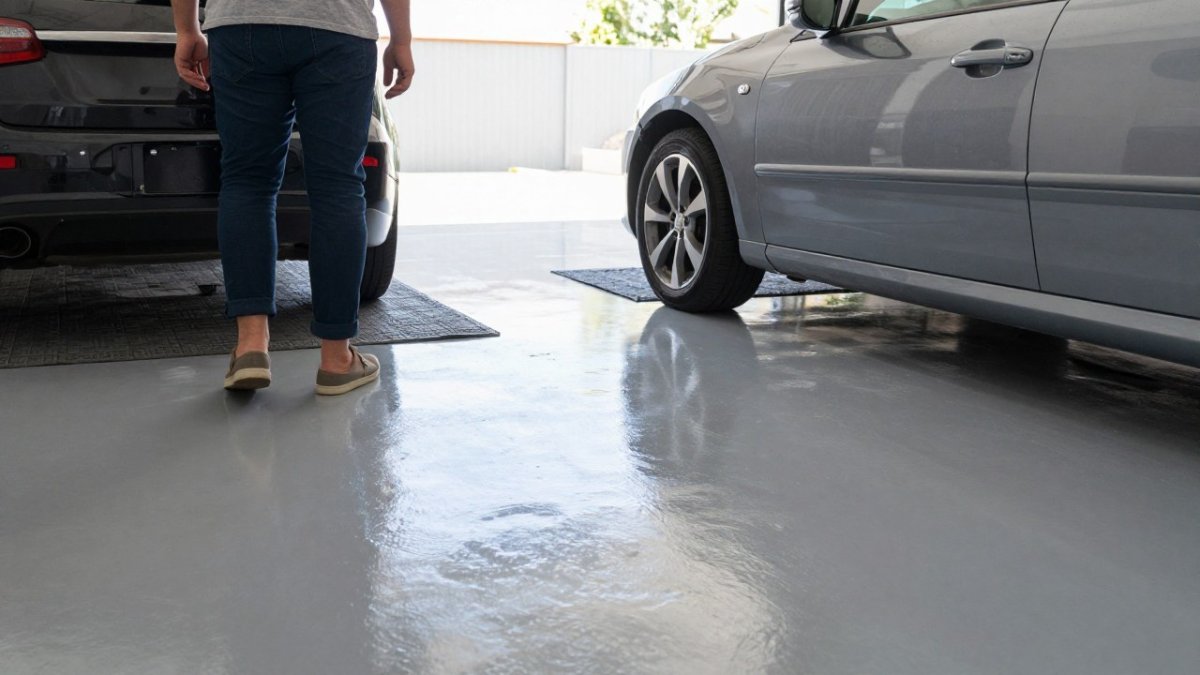
Performance depends on the full system, including surface preparation, the number of coats and the topcoat used. Hot tyres that have been driven for a while can soften weaker coatings and leave marks, so it helps to let tyres cool before parking and to use a floor mat under vehicles that are driven in regularly.
How long should a garage floor coating cure before parking on it?
Cure time varies by product. Cure times vary by system, so confirm the timing with the product data sheet and your installer. Always follow the manufacturer’s data sheet and the installer’s advice, because parking too early can cause tyre marks, indentations or lifting. Ambient temperature and humidity can extend these times.
How can I remove tyre marks from an epoxy garage floor?
Start with a mild, pH-neutral cleaner and a soft brush or pad to lift surface marks. For stubborn rubber marks, a degreaser or plastic scraper may help. Avoid harsh solvents or abrasive pads, which can dull the finish.
